Rail Freight China Europe: The 2025 Complete Guide
The demand for rail freight China Europe has grown significantly as businesses look for a middle ground between expensive air freight and slow sea freight. However, many shippers struggle to understand costs, routes, and customs procedures. This guide explains everything you need to know about rail freight solutions, including pricing, transit times, and documentation.
1. What Is Rail Freight China Europe?
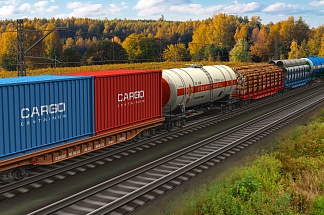
Rail freight is the transportation of goods via trains across Eurasia, connecting major Chinese industrial hubs to European logistics centers. It is part of the China–Europe Railway Express, which covers multiple routes, serving more than 80 European cities.
Unlike sea freight, which takes 30–40 days, and air freight, which is fast but costly, rail offers a balanced option with transit times of 15–20 days at competitive rates.
2. Why Choose Rail Freight from China to Europe?
Mode
Cost
Transit Time
Best For
Pros
Cons
Sea Freight
$
30–40 days
Bulk, non-urgent
Cheapest option
Slow, port delays
Rail Freight
$$
15–20 days
Medium-sized, time-sensitive
Balance of cost/speed
Customs complexity
Air Freight
$$$$
5–12 days
High-value urgent
Fastest delivery
Very expensive
Rail freight provides faster delivery than sea freight while remaining more cost-effective than air.
3. What Are the Main Rail Routes Between China and Europe?
Route Corridor
Pathway
Key Destinations
Average Transit Time
Northern Route
China – Mongolia – Russia – Europe
Moscow, Warsaw, Hamburg
15–18 days
Western Route
China – Kazakhstan – Russia – Belarus – Poland
Duisburg, Hamburg, Rotterdam
16–20 days
Middle Route
China – Kazakhstan – Caspian Sea – Turkey – Europe
Istanbul, Budapest, Vienna
18–22 days
These corridors provide flexibility in case of congestion or political disruptions.
4. How Much Does Rail Freight Cost from China to Europe?
Shipment Type
Estimated Cost (USD)
Notes
20ft FCL
$6,000 – $8,000
Cost varies by season and demand
40ft FCL
$10,000 – $12,500
Economical for larger loads
LCL (per kg)
$0.8 – $1.5
Ideal for small or medium cargo
Rail freight is generally 50–70% cheaper than air freight but more expensive than sea.
5. Which Cities Are Connected by Rail Freight China Europe?
Origin (China)
Destination (Europe)
Frequency
Chongqing
Duisburg, Germany
Daily
Xi’an
Warsaw, Poland
3–4/week
Zhengzhou
Hamburg, Germany
3–5/week
Chengdu
Tilburg, Netherlands
4–5/week
Yiwu
Madrid, Spain
2–3/week
These hubs support both FCL and LCL services with frequent departures.
6. What Documents Are Required for Rail Freight?
Document
Purpose
Commercial Invoice
Declares value & details of goods
Packing List
Specifies cargo breakdown
CIM/SMGS Rail Waybill
Proof of transport contract
Customs Declaration
Clearance in both China and EU
Certificates (if needed)
E.g., origin, fumigation
Errors in paperwork may result in border delays or fines.
7. How Reliable Is Rail Freight China Europe?
Rail freight is highly reliable due to fixed timetables and established customs corridors. However, challenges include:
Seasonal congestion (pre-Christmas and Chinese New Year).
Border bottlenecks at Kazakhstan and Belarus.
Political risks affecting northern routes.
Nevertheless, many businesses find rail freight more predictable than congested sea freight.
8. What Types of Cargo Are Best for Rail Freight?
Electronics & IT equipment – sensitive to delays, mid-value cargo.
Automotive parts – essential for just-in-time supply chains.
Apparel & fashion – seasonal demand cycles.
Machinery & spare parts – medium to high value.
Hazardous cargo may face restrictions, so always confirm with your forwarder.
9. How Does Rail Freight Compare with Other Options?
Factor
Rail Freight
Sea Freight
Air Freight
Transit Time
15–20 days
30–40 days
5–12 days
Cost
$$
$
$$$$
Capacity
Medium–Large
Very Large
Small–Medium
Reliability
High
Moderate
Very High
Environmental Impact
Lower than air
Moderate
Highest
10. How Do Customs and Duties Work on Rail Freight?
China export declaration is filed at departure.
Goods are cleared again at the EU entry point (Poland, Germany, or Hungary).
Import duties & VAT apply based on HS codes.
Incorrect documentation may cause clearance delays.
11. How Can You Reduce Costs in Rail Freight?
Book during off-peak seasons.
Consolidate cargo through LCL services.
Optimize packaging to reduce chargeable weight.
Work with experienced freight forwarders for customs handling.
📦Get a Free Quote
With professional support, rail freight China Europe can transform your supply chain. We provide reliable, cost-effective, and compliant services, whether you need FCL or LCL shipments. Contact us today for a competitive quote and learn how rail can optimize your logistics.