China Europe Rail China to Middle East: Complete Importer’s Guide
The China Europe rail China to Middle East route is reshaping global trade by connecting Chinese factories with Middle Eastern markets through an efficient rail-sea combination. Many importers face challenges such as customs clearance, cost estimation, and delivery scheduling. However, with proper planning and the right logistics partner, this route offers a faster and more reliable alternative to traditional ocean freight.
1. What Is the China Europe Rail Link and How Does It Connect to the Middle East?
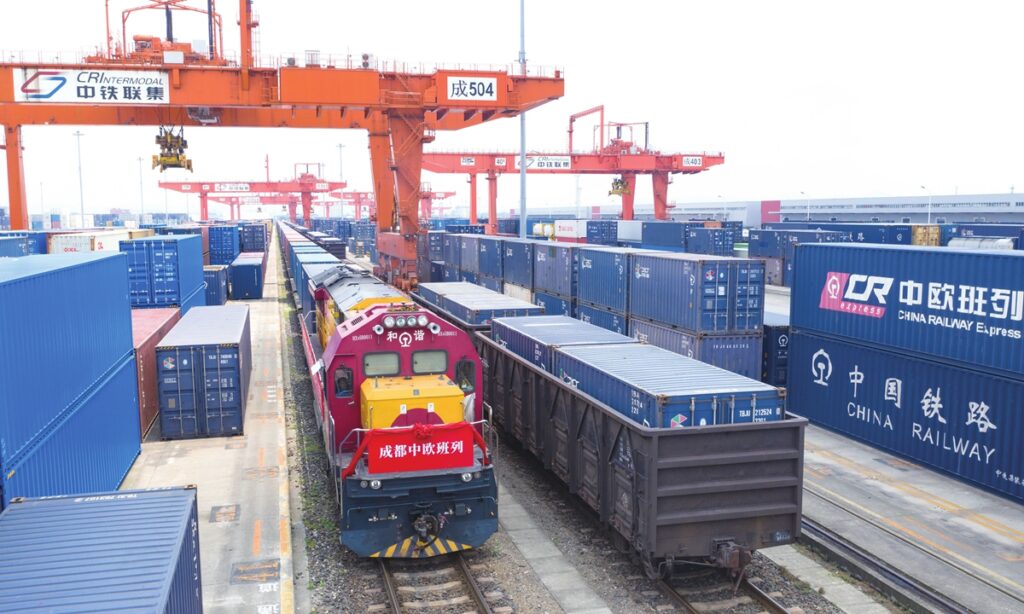
The China-Europe Railway Express is a freight rail network linking major Chinese cities to Europe. From Europe, cargo continues to Middle Eastern destinations by sea, road, or air. This multimodal solution allows importers to reduce transit times while optimizing costs.
2. Why Choose China-Europe Rail for Middle East Shipments?
Faster than sea freight (18–25 days vs. 30–45 days).
Cheaper than air freight (rail-sea combo saves 30–50%).
Reliable schedules with weekly train departures.
Environmentally friendlier than air cargo.
3. How Much Does It Cost to Ship via China Europe Rail to the Middle East?
Nevertheless, experienced freight forwarders can reduce these risks.
11. How Can Importers Optimize Costs on This Route?
Book in advance to secure space.
Consolidate cargo with other importers.
Use bonded warehouses in Europe for re-export.
Partner with brokers to handle documentation.
📦Get a Free Quote
If you want to explore the China Europe rail China to Middle East route for your business, now is the best time. Our logistics team offers door-to-door services, customs clearance, and multimodal shipping solutions tailored for importers. Contact us today for a competitive rail-sea shipping quote.
1. How long does it take to ship from China to Dubai via Europe rail?
On average, 20–25 days including rail transit and sea transshipment.
2. Is rail freight cheaper than air freight to the Middle East?
Yes, rail is typically 40–50% cheaper than air freight for the same route.
3. Can rail freight handle perishable goods to the Middle East?
Yes, but only for medium-shelf-life items with reefer containers; not as fast as air.
4. What ports in the Middle East are used for rail-sea transshipment?
Jebel Ali (UAE), Jeddah (Saudi Arabia), and Doha (Qatar) are the main hubs.
5. Do customs duties differ when using rail vs. sea?
No, duties are based on HS codes and CIF value, regardless of shipping mode.
Conclusion
The China Europe rail China to Middle East route offers importers a balanced solution between cost and speed. Faster than sea freight and cheaper than air freight, it is ideal for medium-value goods requiring timely delivery. By preparing documents, choosing the right freight mode, and working with an experienced forwarder, businesses can streamline their supply chains and reduce risks.