

- By carlie tj
- October 23, 2025
- Logistics Guide
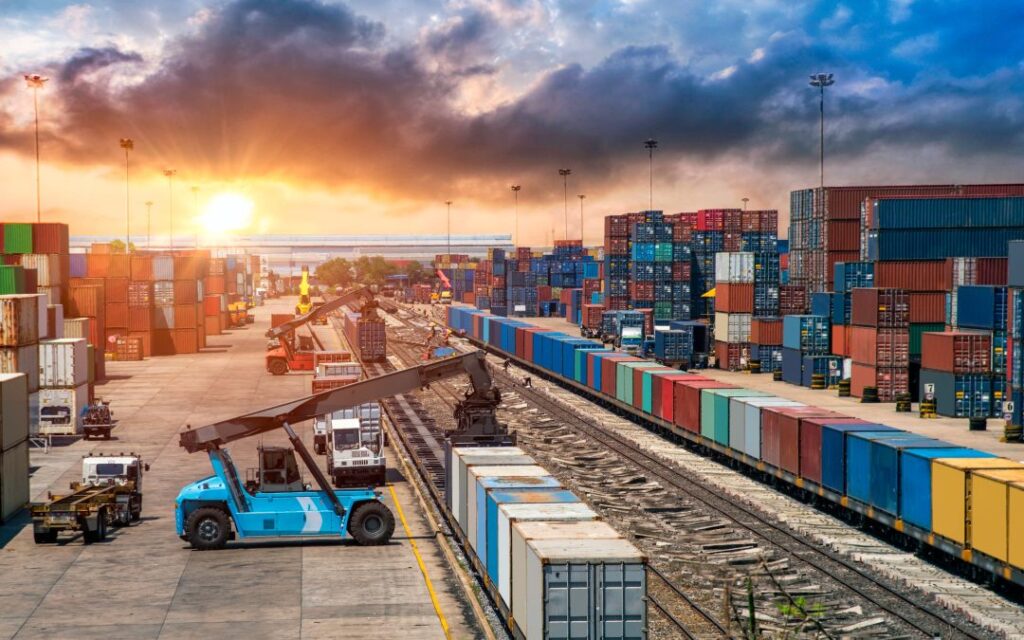
Rail freight has become a powerful alternative for shippers seeking a balance between sea and air transport. When managing train cargo China to UK, businesses benefit from faster transit than sea freight and more economical costs than air. Reliable partners such as China Top Freight help streamline logistics, manage customs, and optimize supply chains for exporters and importers. This guide explores costs, transit times, required documents, and tips for smooth railway freight solutions between China and the UK.
1. Why Choose Train Cargo from China to the UK?
The demand for rail freight surged due to e-commerce growth and supply chain diversification. Compared to sea and air:
- Faster than ocean freight (18–22 days vs 30–40 days).
- Cheaper than air freight (40–60% lower costs).
- Environmentally friendlier with reduced CO₂ emissions.
For many businesses, rail strikes the perfect balance of speed, cost, and sustainability.
2. What Are the Main Routes for Train Cargo to the UK?
Rail shipments follow China–Europe rail corridors under the Belt and Road Initiative.
- Chongqing–Duisburg–London: One of the most common routes.
- Xi’an–Warsaw–London: Direct and efficient for central UK.
- Yiwu–London: Famous rail line for retail goods and consumer products.
3. How Much Does Train Cargo from China to the UK Cost?
Rail freight costs depend on container size, weight, and service type. Below is a reference comparison:
| Mode | Average Cost | Transit Time | Best Use Case |
|---|---|---|---|
| Air Freight | $6–10/kg | 5–10 days | Urgent shipments |
| Sea Freight | $2,000–3,000 / 20ft | 30–40 days | Bulk, non-urgent cargo |
| Rail Freight | $6,000–8,000 / 40ft | 18–22 days | Balanced speed and cost |
📌 4. What Types of Goods Can Be Shipped by Train Cargo?
Rail freight supports a wide range of products:
- Electronics, appliances, and automotive parts.
- Fashion and textiles.
- Consumer goods and e-commerce orders.
- Machinery and industrial equipment.
- Non-hazardous chemicals and packaged foods.
However, dangerous goods (DG) like flammable liquids often face restrictions.
5. What Customs Documents Are Required?
Smooth customs clearance requires complete paperwork.
| Document | Purpose |
|---|---|
| Commercial Invoice | Declares value and transaction details |
| Packing List | Describes goods and packaging |
| Rail Bill of Lading (Railway Waybill) | Contract of carriage |
| Certificate of Origin | Proves product origin |
| Import VAT & Duty Declaration | Required by UK HMRC |
| Safety/Compliance Certificates | For electronics, toys, or regulated goods |
6.What Are the Main UK Destinations for Train Cargo?
Most rail shipments terminate in London, Birmingham, and Manchester, but cargo can be distributed nationwide via trucking services. Key hubs include:
- London Gateway Terminal
- Felixstowe Inland Rail Link
- Birmingham Freightliner Terminal
7.Conclusion
Shipping via train cargo China to UK bridges the gap between speed and affordability. With transit times of 18–22 days, rail provides balance between air and sea freight. While customs and border checks remain challenges, careful planning and experienced freight forwarders help minimize risks. Businesses can achieve faster inventory turnover, stable costs, and eco-friendly solutions by leveraging rail freight corridors. Partnering with experts like China Top Freight ensures your shipments arrive efficiently, safely, and on schedule.
8. Request a Quote
China Top Freight offers:
- ✅ Origin and Destination Countries
- ✅ Cargo Type and Volume
- ✅ Preferred Transport Method (Air, Sea, Rail, Road)
- ✅ Delivery Timeline
- ✅ Special Handling Requirements (if any)
💬9. FAQ
1. Is rail freight reliable for high-value goods?
Rail freight offers tracking, sealed containers, and faster delivery, making it secure and cost-effective for electronics, machinery, and branded consumer items.
2. Can train cargo handle perishable goods?
Perishables require refrigerated containers, but availability is limited. Rail suits packaged foods better than fresh produce requiring strict cold-chain management.
3. How are customs duties calculated for UK rail imports?
Duties depend on HS code classification, product type, and declared value. Import VAT applies in addition to customs duties.
4. What happens if cargo is delayed at the border?
Border inspections may extend transit by several days. Partnering with experienced forwarders reduces risks through proper documentation and route planning.
5. Is rail freight suitable for small shipments?
Small shipments can move via LCL rail services, but costs per cubic meter are higher compared to consolidating larger orders in FCL.