

- By carlie tj
- October 31, 2025
- Logistics Guide
Global businesses looking for a balance between cost and speed increasingly rely on fast rail freight from China to Italy. Through China Top Freight, importers and exporters can take advantage of efficient, eco-friendly, and dependable rail logistics linking key Chinese industrial cities to major Italian trade hubs like Milan, Verona, and Bologna. This method bridges the gap between costly air freight and slow sea transport, ensuring goods arrive quickly and safely across Europe.
1. What Is Fast Rail Freight from China to Italy?
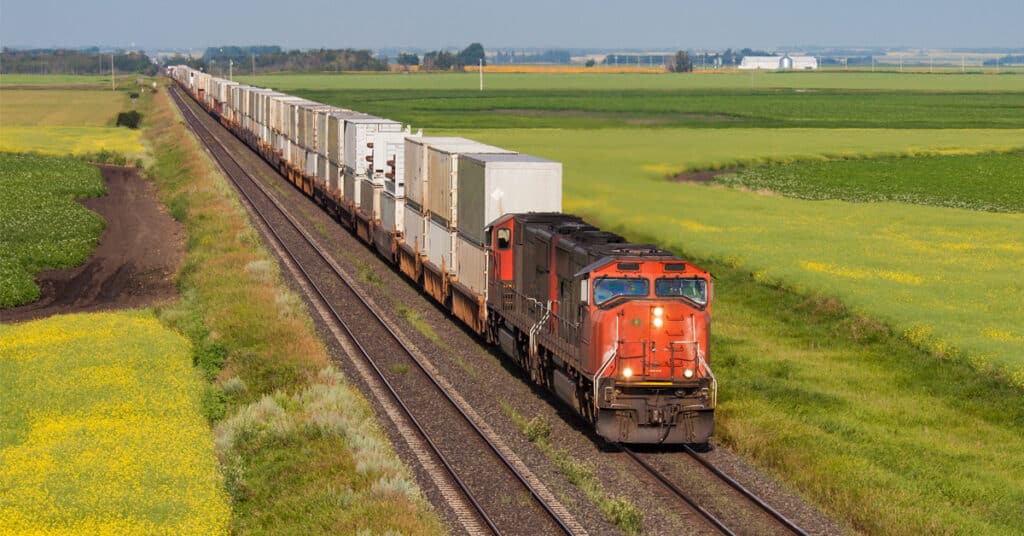
Fast rail freight is a cross-continental shipping solution utilizing the China–Europe Railway Express, connecting over 50 Chinese cities with major European logistics hubs. Cargo moves through Kazakhstan, Russia, Belarus, and Poland before entering Italy via Austria or Germany.
This transport mode ensures shorter delivery times — typically 16 to 20 days — compared to sea freight, which can take up to 40 days. Businesses seeking both efficiency and reliability find it a powerful alternative that supports steady supply chains and competitive pricing.
2. Why Choose Rail Freight Over Sea or Air Transport?
Selecting the right shipping mode depends on time sensitivity, cost, and cargo volume. Below is a comparison:
| Shipping Method | Transit Time | Cost (USD/CBM) | Ideal For | Advantages | Disadvantages |
|---|---|---|---|---|---|
| Air Freight | 3–7 days | $6–$10 | Urgent, high-value cargo | Fastest | Expensive, limited space |
| Rail Freight | 16–20 days | $1.5–$3 | Medium-value, time-sensitive goods | Affordable & reliable | Route restrictions |
| Sea Freight | 30–40 days | $0.5–$1 | Bulk or low-value goods | Cheapest | Long transit time |
Rail freight provides a perfect balance between cost and speed, giving companies a dependable logistics solution ideal for e-commerce, manufacturing, and wholesale shipments.
3. How Long Does Rail Freight Take from China to Italy?
Transit time varies based on route, customs clearance, and border inspections. However, fast rail routes maintain consistent schedules year-round.
| Route | Departure City | Destination | Estimated Transit Time | Frequency |
|---|---|---|---|---|
| Xi’an → Milan | Xi’an | Milan | 16–18 days | 5 trains/week |
| Chengdu → Verona | Chengdu | Verona | 17–19 days | 3–4 trains/week |
| Chongqing → Bologna | Chongqing | Bologna | 18–20 days | 3 trains/week |
| Wuhan → Milan | Wuhan | Milan | 19–21 days | 2–3 trains/week |
These frequent services enable predictable delivery cycles, reducing inventory pressure and enhancing supply chain efficiency.
4. What Type of Goods Are Suitable for Rail Freight?
Fast rail freight accommodates a wide variety of commodities, especially products needing balanced speed and safety:
- Consumer electronics and components
- Automotive parts and machinery
- Textiles and fashion goods
- Furniture and home equipment
- Industrial tools and materials
- Non-perishable food items
- Retail and e-commerce products
However, dangerous, oversized, or temperature-sensitive cargo may require special approval or reefer containers.
5.What Is the Rail Freight Shipping Process?
The China–Italy rail freight process follows a structured, reliable workflow:
- Booking and Pickup – Cargo is collected from the supplier’s location.
- Export Customs Clearance – Goods undergo export inspection and documentation.
- Rail Transportation – Containers are shipped via the China–Europe Railway Express.
- Import Customs in Italy – Customs duties and taxes are processed at the Italian terminal.
- Final Delivery – Cargo is distributed by truck to the consignee’s warehouse or final address.
This streamlined process ensures efficient, secure, and traceable shipping across multiple borders.
6.What Documents Are Required for Rail Freight Shipping?
Proper documentation guarantees fast clearance and compliance with regulations. Below is a checklist:
| Document | Purpose | Issued By |
|---|---|---|
| Commercial Invoice | Declares goods’ value and content | Exporter |
| Packing List | Details cargo dimensions and weight | Shipper |
| Rail Waybill | Confirms rail transport contract | Rail Operator |
| Certificate of Origin | Certifies product origin | Chamber of Commerce |
| Insurance Certificate | Covers transit risk | Insurer |
| Import/Export License | Required for specific goods | Authorities |
Well-prepared docum
7.Conclusion
Fast rail freight from China to Italy offers a powerful combination of speed, reliability, and affordability for businesses engaged in international trade. It ensures shorter delivery times, predictable schedules, and reduced emissions — making it a top choice for importers and exporters alike.
Partnering with China Top Freight means working with experts who handle every stage of your shipment, from documentation to delivery. Ship smarter, greener, and faster today with fast rail freight from China to Italy.
8. Request a Quote
China Top Freight offers:
- ✅ Origin and Destination Countries
- ✅ Cargo Type and Volume
- ✅ Preferred Transport Method (Air, Sea, Rail, Road)
- ✅ Delivery Timeline
- ✅ Special Handling Requirements (if any)
9. FAQ
1. How frequent are rail freight services from China to Italy?
Trains operate 3–6 times weekly from key Chinese cities such as Xi’an, Chengdu, and Chongqing to Milan, Verona, and Bologna.
2. What is the typical delivery time for rail freight?
Transit usually takes 16–20 days depending on route, customs processing, and weather conditions along the Eurasian corridor.
3. Can small shipments use rail freight services?
LCL (Less than Container Load) options allow small businesses to share container space, reducing shipping costs significantly.
4. What are the main arrival terminals in Italy?
Major hubs include Milan, Verona, Bologna, and Mortara, all with strong links to the European logistics network.
5. How can I track my shipment?
Real-time GPS tracking systems enable full visibility of your cargo’s journey from departure in China to arrival in Italy.