

- By carlie tj
- November 3, 2025
- Logistics Guide
Looking for a trusted rail freight from China to France? Whether you’re shipping auto parts, electronics, or consumer goods, businesses are increasingly turning to rail as the perfect middle ground between sea and air. At ChinaTopFreight, we offer secure, timely, and competitively priced rail freight solutions that ensure seamless delivery across borders.
1. What Makes Rail Freight from China to France a Trusted Option?
The growth of the China-Europe Railway Express has made rail freight an appealing option for importers. It combines affordability with faster delivery compared to sea freight. Moreover, it offers better tracking, stable schedules, and a lower carbon footprint. Importers trust this mode because of its consistent performance and expanding network.
2. How Does Rail Freight Compare to Air and Sea Shipping?
Rail freight strikes a perfect balance for many companies. Below is a quick comparison:
| Shipping Method | Average Cost | Transit Time | Best For | Limitations |
|---|---|---|---|---|
| Air Freight | $$$$ | 5–7 Days | Urgent, high-value goods | Very expensive for bulky cargo |
| Rail Freight | $$ | 15–20 Days | Medium-priority shipments | Limited to rail network coverage |
| Sea Freight | $ | 35–45 Days | Large volume, low urgency | Slow transit, port congestion risk |
Rail freight is often chosen when businesses want a faster delivery than sea at significantly lower costs than air.
3. Why Is Rail Freight from China to France Becoming More Popular?
There are several compelling reasons:
- Stable Transit Time: On average, trains reach France in 15–20 days.
- Eco-Friendly: Rail emits far less CO₂ than air and road.
- Predictability: Reliable train schedules reduce uncertainty.
- Wider Coverage: Rail lines now connect over 20 Chinese cities to key French logistics hubs.
These factors, combined with lower customs risks due to direct inland custo
4. Which Goods Are Suitable for Rail Freight Transport?
Rail is ideal for a broad range of cargo types, including:
- Consumer electronics
- Automotive components
- Industrial machinery
- Furniture
- Medical equipment
- Fashion and textile goods
It is particularly suitable for time-sensitive but non-perishable goods that do not justify the high cost of air freight.
5. How Long Does Rail Freight Take from China to France?
Transit times depend on the origin and final destination, but here’s a typical breakdown:
| Origin City (China) | Destination (France) | Estimated Transit Time |
|---|---|---|
| Chongqing | Lyon | 18–20 days |
| Xi’an | Paris | 15–18 days |
| Zhengzhou | Marseille | 16–19 days |
| Yiwu | Le Havre | 17–21 days |
Factors such as customs clearance and transshipment at intermodal hubs may slightly affect the schedule.
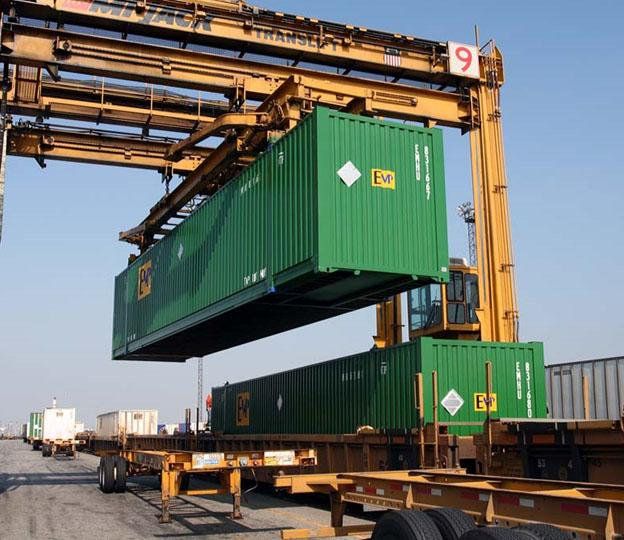
6. What Are the Costs Involved in Rail Freight from China to France?
Pricing varies based on volume, weight, and type of goods. However, approximate cost ranges include:
- LCL (Less than Container Load): $150–$250 per CBM
- FCL 20ft Container: $5,000–$6,500
- FCL 40ft Container: $7,000–$8,500
Additional fees may include customs clearance, warehousing, last-mile delivery, and fuel surcharges. Despite these, rail remains up to 50% cheaper than air freight.
7.Conclusion
Rail freight has revolutionized Eurasian trade by offering a trusted rail freight from China to France that’s cost-effective, faster than sea, and more sustainable than air. Whether you’re an SME or a large importer, rail provides a dependable logistics backbone with growing coverage and smart tracking. With expert partners like ChinaTopFreight, you can optimize your entire supply chain with confidence.
8. Request a Quote
China Top Freight offers:
- ✅ Origin and Destination Countries
- ✅ Cargo Type and Volume
- ✅ Preferred Transport Method (Air, Sea, Rail, Road)
- ✅ Delivery Timeline
- ✅ Special Handling Requirements (if any)
💬9. FAQ
What is the average cost of rail freight from China to France?
The average cost ranges from $150 per CBM for LCL to $8,500 for a 40ft FCL container, depending on your cargo.
Is rail freight faster than sea freight to France?
Rail freight typically takes 15–20 days, whereas sea freight often requires 35–45 days, making rail much quicker for mid-priority goods.
Can rail freight handle fragile or high-value items?
Yes, with proper packaging and container sealing, rail freight is suitable for electronics, machinery, and other sensitive goods.
Do I need an EORI number to import to France?
Importers must have an EORI number to clear goods through French or any EU customs, as per European trade regulations.
Are there temperature-controlled rail options?
Reefer containers are available on select routes for perishable items, though not as widely used as in sea or air freight.