

- By carlie tj
- November 3, 2025
- Logistics Guide
If you’re seeking professional rail freight from China to Germany, you’ve come to the right place. ChinaTopFreight delivers integrated, fast, and cost-effective rail logistics services tailored for businesses needing reliable supply chain solutions across Europe. Amid rising shipping costs and delays, rail freight has emerged as the smart, scalable alternative to air and sea.
1. Why Consider Professional Rail Freight from China to Germany?
In today’s global logistics climate, balancing cost and delivery speed is critical. Rail freight stands out by offering transit times twice as fast as ocean freight and far more economical rates than air cargo.
Moreover, professional rail services offer customs support, tracking, and secure delivery from inland Chinese cities directly to key German terminals like Duisburg and Hamburg.
2. What Makes Rail Freight a Strategic Choice for German Imports?
Speed and Efficiency
Trains take just 15–18 days from China to Germany—ideal for time-sensitive goods without air freight costs.
Affordability
With lower per-CBM rates than air and more consistent pricing than sea freight (which is prone to port delays), rail delivers savings.
Eco-Friendliness
Rail produces far fewer emissions compared to air or road, aligning with sustainability goals for EU businesses.
Reliability
Fewer disruptions, consistent schedules, and strong infrastructure across the Eurasian corridor ensure dependable logistics.
3. How Does the Rail Freight Process Work?
The journey begins in China’s manufacturing hubs and ends in your German warehouse. Here’s how:
- Pickup: Goods are collected from your supplier’s factory.
- Consolidation: LCL or FCL cargo is organized at departure terminals like Xi’an, Chengdu, or Chongqing.
- Transit: Cargo travels via the China-Europe Railway through Kazakhstan, Russia, Belarus, and Poland.
- Arrival in Germany: Major hubs include Duisburg, Hamburg, and Munich.
- Final Delivery: Trucking handles last-mile service to your location.
4. What Goods Are Suited for Rail Freight to Germany?
Rail freight is excellent for:
- Auto parts
- Electronics and semiconductors
- Medical equipment
- Consumer appliances
- Textiles and footwear
- B2B industrial components
However, highly perishable, liquid, or hazardous materials may be restricted or require specialized arrangements.
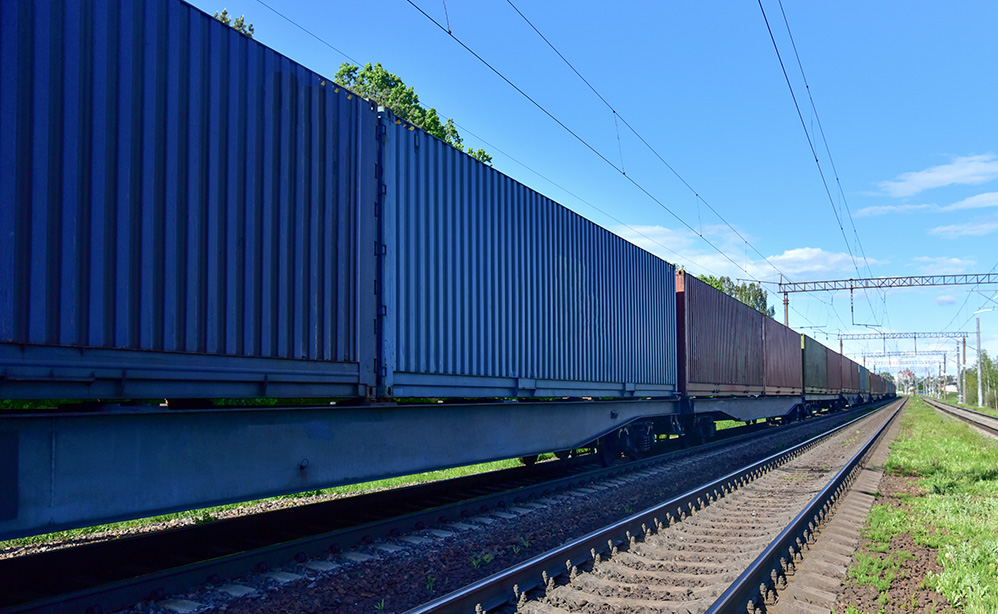
5. How Does Rail Freight Compare to Other Shipping Methods?
| Shipping Mode | Cost (USD/CBM) | Transit Time | Advantages | Limitations |
|---|---|---|---|---|
| Rail Freight | $120–$180 | 15–18 days | Fast, affordable, inland access | Not suitable for perishable goods |
| Sea Freight | $60–$90 | 30–40 days | Low cost for high-volume shipments | Slower, port congestion |
| Air Freight | $450–$800 | 5–7 days | Ideal for urgent, high-value cargo | High cost, limited volume |
6. What Documents Are Needed for Rail Freight to Germany?
Proper documentation is essential for smooth customs clearance at both origin and destination.
| Document Name | Purpose |
|---|---|
| Commercial Invoice | Indicates value and product details |
| Packing List | Cargo specifications: dimensions, weight, packaging |
| Rail Waybill | Contract of carriage |
| Certificate of Origin | Verifies manufacturing country |
| Export Declaration | Required by Chinese customs |
| EORI Number (Germany) | Mandatory for EU importers |
7.Conclusion
Choosing professional rail freight from China to Germany gives your business a competitive edge in cost, delivery speed, and logistics visibility. It’s ideal for medium-value cargo, B2B imports, and e-commerce replenishment.
With expert freight forwarders like ChinaTopFreight handling your cargo from factory to warehouse, you gain reliable transit, regulatory compliance, and customizable service every step of the way. Let your logistics move smarter—choose professional rail today.
8. Request a Quote
China Top Freight offers:
- ✅ Origin and Destination Countries
- ✅ Cargo Type and Volume
- ✅ Preferred Transport Method (Air, Sea, Rail, Road)
- ✅ Delivery Timeline
- ✅ Special Handling Requirements (if any)
9. FAQ
What types of containers are available for rail freight?
Standard 20ft and 40ft containers are used, with FCL for full loads and LCL for smaller consolidated shipments.
Do rail freight rates fluctuate like sea freight?
Rail freight pricing is generally more stable than ocean freight, which is affected by port congestion and seasonal capacity changes.
Can rail freight be used for e-commerce fulfillment?
Rail is ideal for cross-border e-commerce shipments needing faster delivery than sea but at a lower cost than air.
Is insurance required for rail shipments?
Insurance is optional but strongly advised to protect against potential loss, delay, or damage during the international transit.
Are temperature-controlled options available for rail?
Some providers offer reefer containers for temperature-sensitive goods, but availability may vary depending on route and season.