

- By ayla tj
- November 27, 2025
- Logistics Guide
Exporting lighting products to Europe requires precision, reliability, and cost efficiency. The FCL shipping for lighting from China to Europe offers the ideal balance of security and affordability for bulk cargo. This guide explains container options, transit times, costs, and customs procedures, helping lighting manufacturers streamline delivery and reduce logistics risks across international supply chains.
1. What Is FCL Shipping and Why It’s Perfect for Lighting Exports?
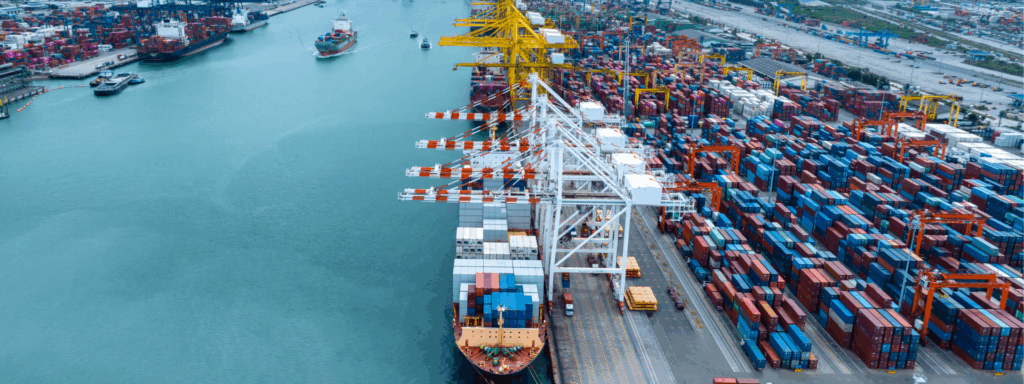
Full Container Load (FCL) shipping means one shipper books the entire container space, ensuring exclusive use. For lighting products, which are often fragile and high-value, this method minimizes handling and damage risks.
Key Advantages:
- Exclusive use of container space
- Reduced risk of breakage or contamination
- Economical for large-volume exports
- Predictable transit times and departure schedules
Lighting exporters shipping in bulk—such as LED fixtures, chandeliers, and industrial lamps—benefit from stable pricing and safer transit compared to LCL or air freight.
2. How Does the FCL Shipping Process Work from China to Europe?
The process of FCL shipping for lighting from China to Europe follows a structured series of logistics steps to ensure smooth operations:
- Freight quotation and container booking (usually 2–3 weeks before departure).
- Packaging and cargo preparation with shock-resistant materials.
- Container loading at the manufacturer’s facility or designated warehouse.
- Customs clearance at the port of origin (Shanghai, Ningbo, Shenzhen).
- Ocean transit via direct or transshipment routes.
- Arrival and customs inspection at European ports (Rotterdam, Hamburg, Antwerp).
- Inland transportation to final destinations via rail or truck.
A professional freight forwarder handles these steps to avoid costly errors and shipping delays.
3. What Are the Main Shipping Routes from China to Europe?
| Origin Port (China) | Destination Port (Europe) | Route Type | Average Transit Time (Days) |
|---|---|---|---|
| Shanghai | Rotterdam, Netherlands | Direct | 30–35 |
| Ningbo | Hamburg, Germany | Direct | 32–37 |
| Shenzhen | Antwerp, Belgium | Transshipment via Singapore | 34–40 |
| Qingdao | Valencia, Spain | Transshipment via Suez | 35–42 |
Table 1: Typical Routes for FCL Shipping to Europe
The most popular entry points are Rotterdam and Hamburg, which offer efficient rail and road distribution networks across the EU.
What are you waiting for?
Contact chinatopfreight for a fast, free quote.
Are you ready to book?
Access live instant freight quotes
4. What Is the Average Transit Time for FCL Shipments?
The average transit time depends on port distance, weather conditions, and customs processing.
Average FCL Shipping Duration (China–Europe):
- Direct service: 30–35 days
- Transshipment service: 36–45 days
- Door-to-door (including inland): 40–50 days
Planning ahead and booking during off-peak months (January–April, September–October) helps exporters maintain delivery consistency.
5. How Much Does FCL Shipping for Lighting Cost?
The FCL shipping cost varies based on container size, route, and market demand.
| Container Type | Capacity (CBM) | Average Cost (USD) | Best For |
|---|---|---|---|
| 20GP | 28–30 | 2,800–3,600 | Small to mid-volume lighting shipments |
| 40GP | 58–60 | 4,800–6,000 | Bulk or large orders |
| 40HQ | 67–70 | 5,200–6,500 | High-volume or oversized lighting |
Table 2: Estimated FCL Container Costs from China to Europe
Freight prices fluctuate due to fuel costs, container shortages, and global shipping trends. Booking early locks in competitive rates.
6. What Documents Are Required for Lighting Export to Europe?
Accurate documentation ensures compliance with both Chinese export laws and EU import regulations.
| Document Name | Purpose | Issued By |
|---|---|---|
| Commercial Invoice | Declares product value | Exporter |
| Packing List | Details weight & quantity | Shipper |
| Bill of Lading | Confirms transport contract | Freight Forwarder |
| CE Certificate | Confirms compliance with EU safety standards | Manufacturer |
| Certificate of Origin | Identifies country of manufacture | Chamber of Commerce |
| Import Declaration | Required for EU customs clearance | Importer or Broker |
Table 3: Required Documents for FCL Lighting Shipments
Incomplete or incorrect paperwork often causes delays or penalties during customs inspection.
7. How to Pack and Load Lighting Products for FCL Containers?
Lighting is fragile, making proper packing critical.
Best Packing Practices:
- Use foam and cardboard separators between fixtures.
- Seal products in moisture-proof packaging.
- Reinforce outer cartons with edge protectors.
- Use palletized loading for easier handling.
- Label packages with “Fragile” and “Handle with Care.”
Avoid overloading to maintain weight balance within the container.
8. What Customs Regulations Apply to Lighting Imports in Europe?
Lighting products imported into the EU must comply with:
- EU CE certification for electrical safety.
- RoHS directive, restricting hazardous materials.
- Energy efficiency labeling standards.
- Packaging Waste Directive for recyclability compliance.
Customs clearance at European ports generally takes 1–3 working days, depending on documentation accuracy and inspection results.
9. How Does FCL Compare with Other Shipping Methods for Lighting?
| Shipping Mode | Transit Time (Days) | Cost (USD/kg) | Best For | Advantages | Disadvantages |
|---|---|---|---|---|---|
| FCL Sea Freight | 30–40 | 0.25–0.40 | Bulk lighting cargo | Cost-effective, safe | Slower |
| LCL Sea Freight | 35–45 | 0.50–0.80 | Smaller shipments | Flexible | Shared container, more handling |
| Air Freight | 5–8 | 4.50–7.00 | Urgent shipments | Fastest delivery | Expensive |
| Rail Freight | 20–25 | 0.80–1.20 | East/Central Europe | Balanced speed and cost | Limited routes |
Table 4: Comparison of Shipping Methods for Lighting
FCL shipping remains the most efficient solution for large-scale lighting exporters targeting European markets.
10. What Are the Common Challenges in FCL Shipping for Lighting?
Despite its reliability, exporters may face several challenges:
- Container shortages during peak seasons
- Port congestion causing vessel delays
- Customs inspection for electrical goods
- Fluctuating freight rates linked to oil prices
- Documentation errors delaying clearance
Collaborating with experienced freight forwarders ensures proactive handling of these potential issues.
Conclusion
The FCL shipping for lighting from China to Europe is a cost-efficient, reliable, and secure method for large-scale exports. With average transit times of 30–40 days, proper documentation, and professional freight handling, exporters can ensure product safety and timely delivery. By partnering with an experienced forwarder like China Top Freight, lighting manufacturers can simplify logistics, reduce costs, and strengthen their market presence across Europe.
FAQ
1. What is the average delivery time for FCL shipments to Europe?
Transit usually takes 30–40 days by sea, depending on origin and destination ports, carrier routes, and customs clearance efficiency.
2. Which European ports are best for lighting imports?
Rotterdam, Hamburg, and Antwerp are top choices due to high capacity, efficient customs procedures, and well-connected inland transport networks.
3. Do I need CE certification for lighting exports to the EU?
Yes. All lighting products imported into the European Union must meet CE standards for electrical safety and energy efficiency.
4. How can I prevent damage to lighting during transit?
Use foam padding, moisture-resistant wrapping, and reinforced cartons. Always label packages as fragile and use professional loading supervision.
5. What is the difference between FCL and LCL shipping?
FCL gives you an entire container for exclusive use, while LCL involves sharing space with other exporters, leading to longer handling times.