

- By ayla tj
- December 3, 2025
- Logistics Guide
Shipping hardware tools—from hand tools to electric tools, power-tool accessories, and metal components—requires stable, secure, and cost-effective transport options. Because these products are often heavy, bulky, and packed in high quantities, many importers choose FCL shipping for hardware tools from China to Netherlands as the most economical and predictable solution. Moreover, with China serving as the world’s largest manufacturing base for hardware goods and the Netherlands acting as a major EU distribution hub, optimizing freight strategy is essential.
This article provides a complete, data-driven guide to FCL shipping, covering freight rates, transport methods, transit times, insurance, customs compliance, container planning, and risk control.
Why Is FCL Shipping Ideal for Hardware Tools Going from China to the Netherlands?

FCL is the preferred option for heavy hardware shipments because hardware tools are dense, durable, and often ship in large pallets or cartons. FCL minimizes handling, protects cargo integrity, and reduces freight costs significantly compared to LCL. Additionally, FCL offers better schedule reliability for European distribution.
Key advantages for hardware products
- Lower cost per CBM for heavy freight
- Reduced risk of damage compared to LCL consolidation
- Faster handling at departure and arrival terminals
- Higher loading flexibility for mixed hardware SKUs
- Better transit time reliability for EU restocking cycles
Which Transport Modes Support China–Netherlands Hardware Shipments?
China and the Netherlands have strong logistics connectivity, especially through Rotterdam and Amsterdam. Hardware importers choose between sea, rail, and air depending on volume, urgency, and cost.
Shipping Method Comparison (Sea + Rail + Air)
| Transport Mode | Cost Level | Transit Time | Best For |
|---|---|---|---|
| Sea Freight (FCL) | Low | 30–38 days | Heavy hardware tools, large pallets, bulk orders |
| Rail Freight | Medium | 15–22 days | Mid-urgency hardware restocking, balanced speed/cost |
| Air Freight | High | 3–6 days | Urgent spare parts, high-value machinery tools |
How Long Does FCL Shipping Take from China to the Netherlands?
Transit time depends on the port of origin, congestion level, chosen carrier, and whether inland trucking is required for final delivery. Rotterdam and Amsterdam are the primary gateways for hardware importers.
Estimated transit times by origin port
| Origin Port | Mode | Rotterdam | Amsterdam | Rail to Tilburg |
|---|---|---|---|---|
| Shanghai | Sea | 32–38 days | 30–36 days | — |
| Ningbo | Sea | 29–35 days | 28–33 days | — |
| Qingdao | Sea | 33–40 days | 31–38 days | — |
| Shenzhen | Sea | 30–37 days | 29–35 days | — |
| Xi’an / Chongqing | Rail | — | — | 15–20 days |
Sea freight remains the most cost-effective choice for large hardware orders.
What Are the Typical FCL Freight Costs for Hardware Tools?
FCL shipping cost varies by port pair, season, fuel surcharge, and carrier. Heavy hardware tools often result in full container loads, making cost-per-unit highly competitive.
Typical 20GP & 40HQ FCL freight cost ranges (reference only)
| Container Type | Estimated Rate (USD) | Best Use Case |
|---|---|---|
| 20GP | $900–$1,600 | Dense hardware items, tools in metal cases |
| 40GP | $1,300–$2,100 | Larger orders requiring more CBM |
| 40HQ | $1,400–$2,300 | Voluminous hardware items, mixed SKUs |
Rates fluctuate based on season, equipment availability, and carrier route.
What Documents Are Required for Hardware Tool Imports into the Netherlands?
Hardware tools are considered general cargo, but due to product safety regulations, some tools require CE certification and proper labeling. Additionally, customs documentation must be fully accurate to avoid delays.
Customs documents checklist
| Document | Purpose |
|---|---|
| Commercial Invoice | Declares value, product details |
| Packing List | Lists weight, dimensions, cartons |
| Bill of Lading / Rail AWB / Air AWB | Transport record and ownership proof |
| CE Certificates (if needed) | Compliance for electrical tools |
| HS Codes | Required for import classification |
| Importer EORI Number | Mandatory for EU customs clearance |
Ensuring complete paperwork significantly reduces clearance delays.
What are you waiting for?
Contact chinatopfreight for a fast, free quote.
Are you ready to book?
Access live instant freight quotes
How to Prepare Hardware Tools for Safe FCL Transport?
Hardware tools are heavy and often sharp, requiring proper securing and reinforced packaging. Damage can occur if items shift during long-haul sea or rail journeys.
Best packaging practices for hardware tools
- Use strong double-walled cartons
- Add foam or corrugated inserts for metal tools
- Secure pallets with heavy-duty straps
- Apply corner protectors for pallet integrity
- Wrap tools with anti-rust protective film if necessary
- Avoid overloading cartons to prevent collapse
Proper packaging reduces damage risk and may help during insurance claims.
How Does Insurance Work for FCL Shipping of Hardware Tools?
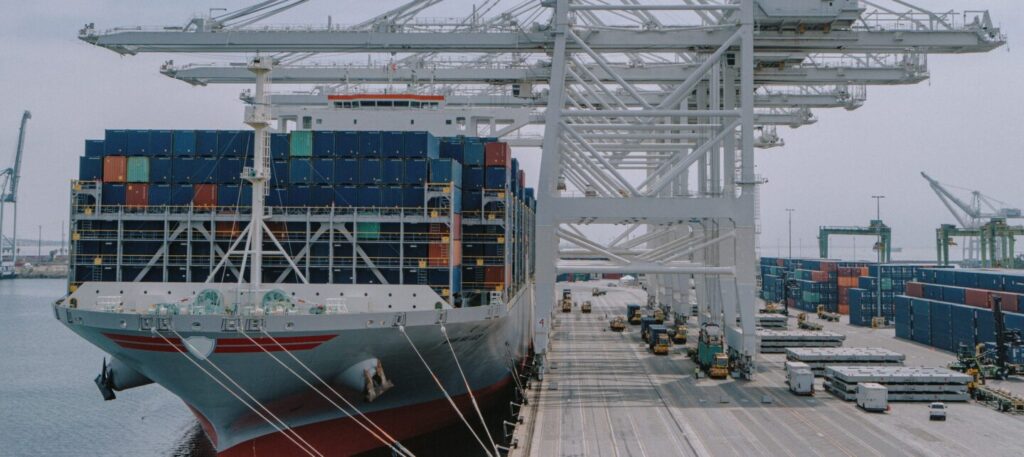
Since hardware tools are valuable and packed densely, insurance helps protect against loss, damage, and handling issues. Many importers use ICC (A) for full protection.
Coverage options
- All-risk ICC (A) policies
- Named-risk ICC (B) or (C)
- Per-container insurance packages
- Rail cargo insurance
- High-value part-specific add-on coverage
Premiums depend on value, route risk, and packing method.
Should You Choose Sea, Rail, or Air for Shipping Hardware Tools?
This depends on delivery deadlines, product urgency, inventory planning, and budget constraints.
Comparison of shipping modes
| Factor | Sea Freight | Rail Freight | Air Freight |
|---|---|---|---|
| Speed | Slow | Medium | Fastest |
| Cost | Lowest | Medium | Highest |
| Suitable for Hardware? | Yes | Yes | Only for urgent parts |
| Carbon Footprint | Low | Medium | High |
Sea freight is the best for bulk orders, rail for mid-urgency restocking, and air for emergency shipments.
How to Reduce Transit Time Uncertainty for Hardware Shipments?
Because seasonal congestion can delay EU ports, hardware importers should plan ahead and choose reliable carriers.
Techniques to improve schedule stability
- Choose direct sailings from major China ports
- Use carriers with Rotterdam priority berthing
- Book early during peak seasons
- Use rail freight for faster replenishment
- Avoid overloading pallets to prevent customs inspections
Consistent planning keeps hardware inventories stable.
How to Select the Best FCL Provider for Hardware Tools?
Choosing a reliable logistics partner improves customs clearance speed, schedule accuracy, and overall shipping performance.
What to look for in a provider
- Proven experience with hardware shipments
- Transparent rate structure
- Real-time visibility systems
- Expertise in EU customs and CE compliance
- Multimodal options (Sea + Rail + Air)
- Professional packing and consolidation services
Conclusion
Choosing efficient FCL shipping for hardware tools from China to Netherlands ensures cost efficiency, shipment stability, and smooth customs clearance. With multiple transport modes—sea, rail, and air—importers can optimize delivery schedules while balancing cost and reliability. Additionally, proper packaging, accurate documentation, and full-risk insurance help protect high-density hardware cargo across every stage of transit. As long as businesses adopt strong logistics planning, shipping hardware tools into the Netherlands becomes predictable, secure, and highly competitive.
FAQ
1. Are hardware tools safe to ship in 20GP or 40HQ containers?
Yes. Hardware tools are well-suited for FCL shipping due to their weight and durability, especially when properly palletized and reinforced for long-haul transport.
2. Does FCL shipping reduce damage risk for metal tools?
Yes. FCL minimizes handling and avoids LCL consolidation, therefore lowering the risk of compression, metal friction, or carton collapse during overseas shipping.
3. How fast is rail freight for hardware shipments to the Netherlands?
Rail freight typically arrives within 15–22 days, offering a balanced solution for supply chains needing faster delivery than ocean freight but lower cost than air.
4. Do hardware tools require CE certification before EU import?
Only electric or powered tools require CE marking. Manual tools usually do not, although accurate HS codes and correct labeling are still mandatory for Dutch customs.
5. Can I ship mixed hardware SKUs inside one FCL container?
Yes. Importers often consolidate various tool types—hand tools, electric tools, accessories—inside the same FCL container as long as packaging remains secure.