

The China Europe rail China to Spain route has become one of the most reliable logistics corridors connecting Asia and Europe. For businesses seeking faster delivery than sea freight but lower costs than air freight, rail freight offers the perfect balance. This comprehensive guide explores transit times, pricing, routes, customs, and key advantages for importers and exporters using China–Spain rail connections.

1. Why Is China Europe Rail Freight to Spain So Popular?
The China–Spain rail corridor has grown rapidly under the Belt and Road Initiative (BRI), offering a direct and eco-friendly alternative for international logistics.
Key Benefits
- Reduced transit time: 18–22 days door-to-door.
- Cost-effective: Up to 50% cheaper than air freight.
- Reliable schedule: Regular departures from multiple Chinese cities.
- Sustainable option: Lower carbon emissions compared to air transport.
The route helps e-commerce companies, manufacturers, and distributors move goods such as electronics, textiles, machinery, and auto parts efficiently.
2. What Are the Main Rail Routes from China to Spain?
Multiple rail corridors connect China and Spain through Central Asia and Europe. The most common route passes through Kazakhstan, Russia, Belarus, Poland, Germany, and France before reaching Spain.
| Origin City (China) | Destination (Spain) | Route Highlights | Average Transit (Days) |
|---|---|---|---|
| Chongqing | Madrid | Via Kazakhstan–Russia–Germany | 18–21 |
| Yiwu | Madrid | Yiwu–Alashankou–Duisburg–Madrid | 20–23 |
| Zhengzhou | Zaragoza | Crosses Poland and France | 19–22 |
| Chengdu | Valencia | Via Lodz and Lyon | 20–24 |
| Wuhan | Barcelona | Through Duisburg–Paris–Barcelona | 21–25 |
Tip: Choose the nearest Chinese departure hub to reduce domestic trucking costs and transit time.
3. How Long Does China–Spain Rail Freight Take Compared to Other Modes?
Transit time depends on customs, route, and cargo type. Here’s a comparison:
| Shipping Mode | Average Transit Time | Ideal For | Cost (USD/CBM or kg) | Reliability |
|---|---|---|---|---|
| Rail Freight | 18–22 days | General cargo, eCommerce | $120–$160/CBM | High |
| Sea Freight | 30–40 days | Bulk, non-urgent cargo | $50–$80/CBM | High |
| Air Freight | 5–8 days | Urgent or high-value cargo | $6–$9/kg | Very High |
| Express Courier | 5–7 days | Samples, small goods | $8–$12/kg | High |
Rail freight clearly bridges the gap between speed and affordability for time-sensitive goods that don’t require air delivery.
What are you waiting for?
Contact chinatopfreight for a fast, free quote.
Are you ready to book?
Access live instant freight quotes
4. What Types of Goods Can Be Shipped via Rail from China to Spain?
The China Europe rail China to Spain route supports a wide range of cargo:
- Consumer electronics and parts
- Automotive components and machinery
- Textiles, apparel, and footwear
- Furniture and home décor
- E-commerce parcels
- Non-perishable food products
- Chemical products (non-hazardous)
However, perishable, liquid, and hazardous goods require special handling or approval before shipping.
5. What Are the Costs of Rail Freight from China to Spain?
| Cargo Type | Estimated Rate | Service Type | Remarks |
|---|---|---|---|
| General Goods | $120–$160/CBM | LCL/FCL | Standard rate |
| E-commerce Parcels | $6–$8/kg | Door-to-door | Ideal for small packages |
| Temperature-Controlled | $200–$250/CBM | Reefer Container | Cold chain transport |
| High-Value Cargo | Negotiable | Insured Service | Includes tracking & coverage |
6. What Documents Are Required for Rail Freight Shipping?
| Document | Description |
|---|---|
| Commercial Invoice | Declares product value and buyer/seller info |
| Packing List | Details package weight, dimensions, and contents |
| Railway Bill of Lading (B/L) | Proof of transport contract |
| Certificate of Origin | Confirms country of manufacture |
| Customs Declaration Form | Required for both China and Spain |
| Insurance Certificate | Proof of coverage during transit |
Moreover, customs authorities may request product licenses or inspection certificates for specific categories such as medical or electronic goods.
7. How Does Customs Clearance Work for China–Spain Rail Shipments?
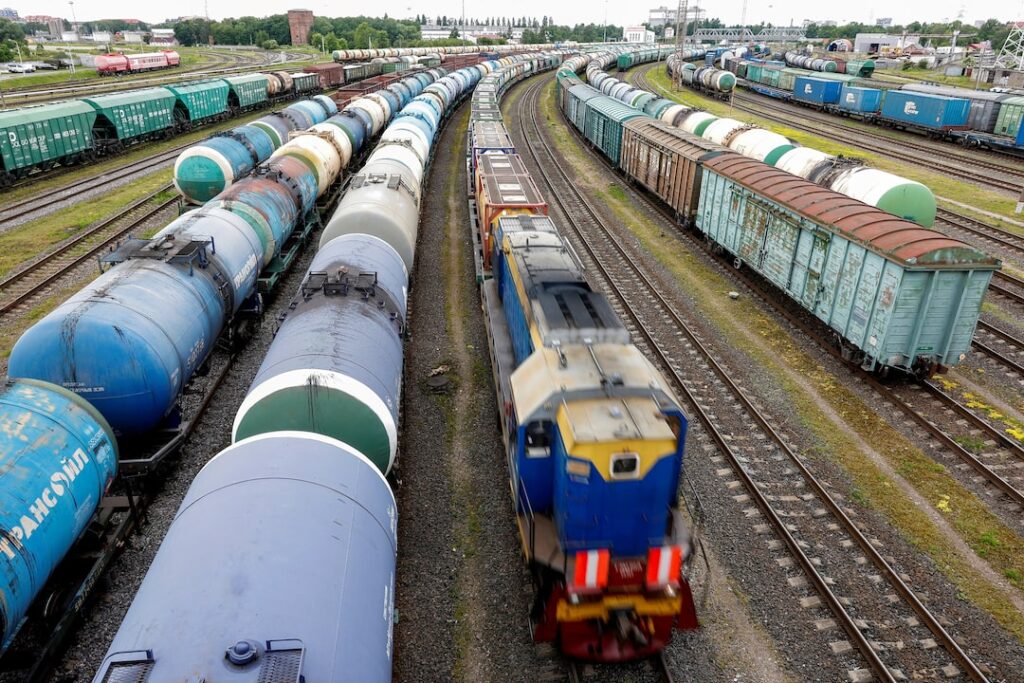
Customs procedures occur at both the Chinese exit border and European entry point.
Steps for Clearance
- Pre-clearance documentation submitted before departure.
- Inspection at Alashankou or Manzhouli (China’s border stations).
- Re-inspection at Małaszewicze (Poland)—the EU’s main entry hub.
- Transit clearance across the Schengen Zone.
- Final import declaration in Spain (Madrid, Barcelona, or Valencia).
Tip: Use a freight forwarder experienced in railway customs brokerage to ensure accuracy and compliance.
8. What Are the Advantages of Rail Freight Between China and Spain?
| Advantage | Description |
|---|---|
| Faster Than Sea Freight | Cuts transit time by 30–40%. |
| Lower Cost Than Air Freight | Ideal for medium-value cargo. |
| Eco-Friendly Option | Reduces CO₂ emissions by up to 80%. |
| High Security | Sealed containers minimize theft and damage. |
| Stable Schedule | Regular weekly departures. |
| Door-to-Door Flexibility | Rail-to-truck connections cover all Spain. |
Additionally, multimodal solutions (rail + truck) provide last-mile delivery across Europe, making it suitable for importers in Madrid, Valencia, and beyond.
9. How to Choose Between FCL and LCL for Rail Freight
| Criteria | FCL (Full Container Load) | LCL (Less than Container Load) |
|---|---|---|
| Volume | Over 15 CBM | Below 15 CBM |
| Cost | Lower per unit | Higher per CBM |
| Transit Time | Faster (direct) | Slightly longer (consolidation) |
| Handling Risk | Minimal | Higher (shared space) |
| Best For | Large shipments | Smaller or mixed goods |
Recommendation: For consistent exports, FCL rail freight provides better cost efficiency and reliability.
10. How Is Cargo Tracked During Rail Shipping?
Rail shipments use advanced GPS and IoT tracking systems to monitor:
- Real-time location
- Border crossings
- Container temperature (if refrigerated)
- Estimated time of arrival
Shippers receive online access to dashboards for visibility and transparency throughout the journey.
Conclusion
The China Europe rail China to Spain route provides a perfect middle-ground logistics solution—faster than sea, cheaper than air, and greener overall. With stable transit schedules, multimodal flexibility, and comprehensive customs support, it continues to redefine Sino-European trade logistics. Whether you’re shipping electronics, machinery, or apparel, partnering with a reliable freight forwarder ensures your cargo reaches Spain efficiently and safely.
FAQ
1. How long does it take for rail freight from China to Spain?
On average, 18 to 22 days, depending on route and customs processes at major transit points such as Poland and Germany.
2. Which Chinese cities offer rail freight to Spain?
Major departure hubs include Yiwu, Chongqing, Chengdu, Zhengzhou, and Wuhan, all offering regular weekly services to Spain.
3. Can I ship small parcels via rail freight?
Yes. LCL (Less than Container Load) and e-commerce services allow small businesses to ship partial loads or pallets efficiently.
4. Are there temperature-controlled rail options for Spain?
Yes. Specialized reefer containers maintain consistent temperature for food, pharmaceuticals, and perishable items throughout the rail journey.
5. What are customs duties for rail imports into Spain?
Customs duties vary by product type and HS code. Importers must also pay VAT (21%) upon entry into Spain.