

Businesses moving goods overland often choose economy ground shipping as a budget-friendly alternative to air freight or express courier services. It suits bulk, palletized, or heavy items well, enabling companies to reduce costs while keeping delivery schedules predictable.
In this guide, we’ll explore the essentials of economy ground shipping—how it works, when to use it, key transit factors, and how to identify the best solution for your supply chain.
1. What Is Economy Ground Shipping?
Shippers transport freight via road—typically by truck—using cost-optimized, non-urgent services. Economy ground shipping works best for pallets, bulky goods, and full or partial truckloads that don’t need expedited delivery.
To keep costs low, carriers rely on standard routes, less-flexible schedules, and shared assets to maximize efficiency.
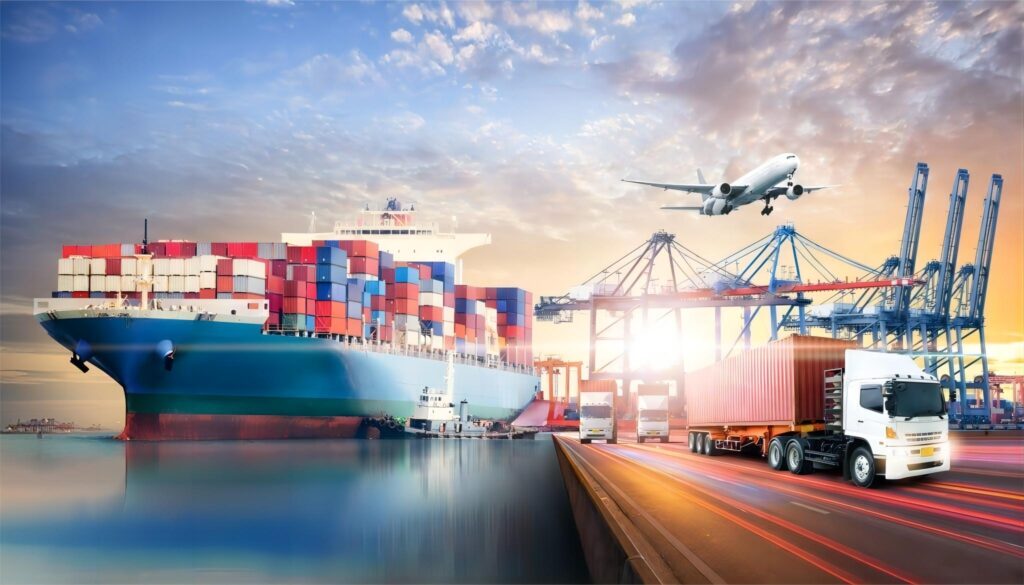
📌2. Why Choose Economy Ground Shipping?
Businesses choose economy ground shipping for several reasons:
- Lower per-kilometer cost compared to expedited road, air, ocean, or rail transport
- Shippers move bulky or less time-sensitive goods using logistics that easily combine with sea, air, or rail transport.
- Carriers maintain stable delivery schedules and ensure predictable transit times across ground, sea, air, and rail networks.
- Businesses integrate shipments seamlessly across multiple transport modes, such as linking ground transport with ocean, air, or rail legs.
As e-commerce fulfillment expands across continental regions, businesses increasingly rely on a mix of ground, sea, air, and rail transport to achieve a practical balance between cost and service.
3. Transportation Mechanics: How It Works
More than 30% of shipment success depends on choosing the right transportation method. Here’s how this cost-effective ground shipping typically operates:
- Load consolidation—multiple clients’ goods may share a truck
- Pickup and staging at a local terminal
- Overland transit with scheduled stops en route
- Terminal delivery or line haul drop
- Last-mile delivery to destination warehouse or store

📌4. What Impacts Cost and Transit in Economy Ground Shipping
Several key factors shape how economy ground shipping operates. These include:
- The distance and geographic region of the shipment
- The freight’s density—how its weight compares to its volume
- Whether the route is direct or follows a hub-and-spoke model
- Seasonal shifts in carrier availability and demand
- Additional costs like fuel surcharges and terminal handling fees
5. Packaging & Load Optimization
Because transportation plays a central role in this method, shippers must follow good packaging practices:
- Use stackable pallets with uniform sizes to load trucks efficiently
- Apply shrink-wrap and strapping to protect goods during transit
- Avoid irregular shapes to reduce dimensional surcharges
- Label each item clearly with IDs and handling instructions for terminal pickups
By handling freight smartly, businesses reduce delays and minimize insurance risks during final delivery.
6. Request a Quote
China Top Freight offers:
- ✅ Origin and Destination Countries
- ✅ Cargo Type and Volume
- ✅ Preferred Transport Method (Air, Sea, Rail, Road)
- ✅ Delivery Timeline
- ✅ Special Handling Requirements (if any)
7. FAQ
Q1: Is economy ground shipping slower than standard trucking?
It can be slower—built for cost-efficiency rather than express delivery.
Q2: Can I track my economy ground shipment?
Yes—carriers often provide milestone updates, though not real-time GPS.
Q3: Is insurance included?
Typically optional. Businesses are advised to confirm coverage with the carrier.
Q4: Can this be combined with other modes, like rail?
Yes. Economy ground shipping often forms the final leg in multimodal transport chains.
Q5: What load sizes are supported?
Most providers handle both palletized LTL (less-than-truckload) and full truckloads.