

Flat Rack FCL: Best Route for Hardware Tools China to Poland
Shipping oversized or irregularly shaped hardware tools from China to Poland presents unique logistical challenges. Securing the most efficient and cost-effective route is paramount for businesses, especially when dealing with specialized cargo. Understanding the intricacies of Flat Rack Full Container Load (FCL) shipping is crucial for successful import/export operations. China Top Freight offers comprehensive solutions tailored to your specific needs.

What is Flat Rack FCL Shipping and Why Choose It for Hardware Tools?
Flat Rack FCL refers to using a full container load on a flat rack container. These specialized containers lack side walls and often a roof, making them ideal for oversized, heavy, or oddly shaped cargo that cannot fit into standard containers. Consequently, they are frequently used for industrial hardware, machinery, and large tools.
Choosing Flat Rack FCL for hardware tools ensures dedicated space for your shipment. This minimizes handling, reducing the risk of damage during transit. Moreover, it provides greater flexibility for loading and unloading, accommodating items that require top or side access. This method is particularly beneficial for complex or delicate equipment.
| Flat Rack Type | Typical Dimensions (LxW) | Max Load Capacity | Common Cargo for Hardware Tools |
|---|---|---|---|
| 20-foot Flat Rack | 6.06m x 2.44m | 22-25 tons | Small industrial presses, large workbenches, specialized engine parts |
| 40-foot Flat Rack | 12.19m x 2.44m | 30-40 tons | Heavy machinery, large generators, construction equipment components |
| Collapsible Flat Rack | Varies | Similar to fixed | Items requiring compact storage for return trips, adaptable sizing |
What are the Key Considerations for Shipping Hardware Tools from China to Poland?
Navigating the logistics for hardware tools from China to Poland requires careful planning. Several factors directly impact the efficiency and cost-effectiveness of your supply chain. Therefore, understanding these elements is crucial for a smooth shipping process.
Crucially, cargo specifications dictate the container type and route. For instance, oversized dimensions or exceptional weight will necessitate a flat rack container. Furthermore, the urgency of your shipment will influence the choice between sea, rail, or a combined transport solution. Each option presents distinct advantages and trade-offs.
Budget constraints also play a significant role in decision-making. High freight rates can quickly erode profit margins, necessitating a balance between speed and cost. Additionally, customs regulations in both China and Poland must be meticulously followed to prevent delays. Proper documentation is indispensable for seamless import/export operations.
What are the Primary Shipping Routes from China to Poland?
When transporting hardware tools from China to Poland, businesses primarily choose between sea freight and rail freight. Each mode offers unique benefits depending on your priorities for cost, speed, and cargo type. Exploring these options carefully is essential for optimizing your shipping to Europe.
Sea freight remains the most common and economical choice for large or heavy shipments. Vessels depart from major Chinese ports like Shanghai, Ningbo, and Shenzhen, heading towards European hubs such as Hamburg, Rotterdam, or Gdansk. From these gateway ports, cargo then moves inland to Poland via truck or rail. This route typically offers the lowest per-unit cost.
Alternatively, rail freight via the New Silk Road offers a faster transit time compared to sea freight. Trains depart from cities like Chengdu, Chongqing, and Xi’an, traversing Central Asia and Russia before reaching terminals in Poland, such as Lodz or Malaszewicze. This option bridges the gap between the speed of air freight and the cost-effectiveness of sea freight.
Hybrid solutions, combining sea and rail, can also be effective. For example, cargo might travel by sea to a European port, then transfer to rail for the final leg to Poland. This approach can optimize both cost and speed, offering a flexible door-to-door service tailored to specific needs.
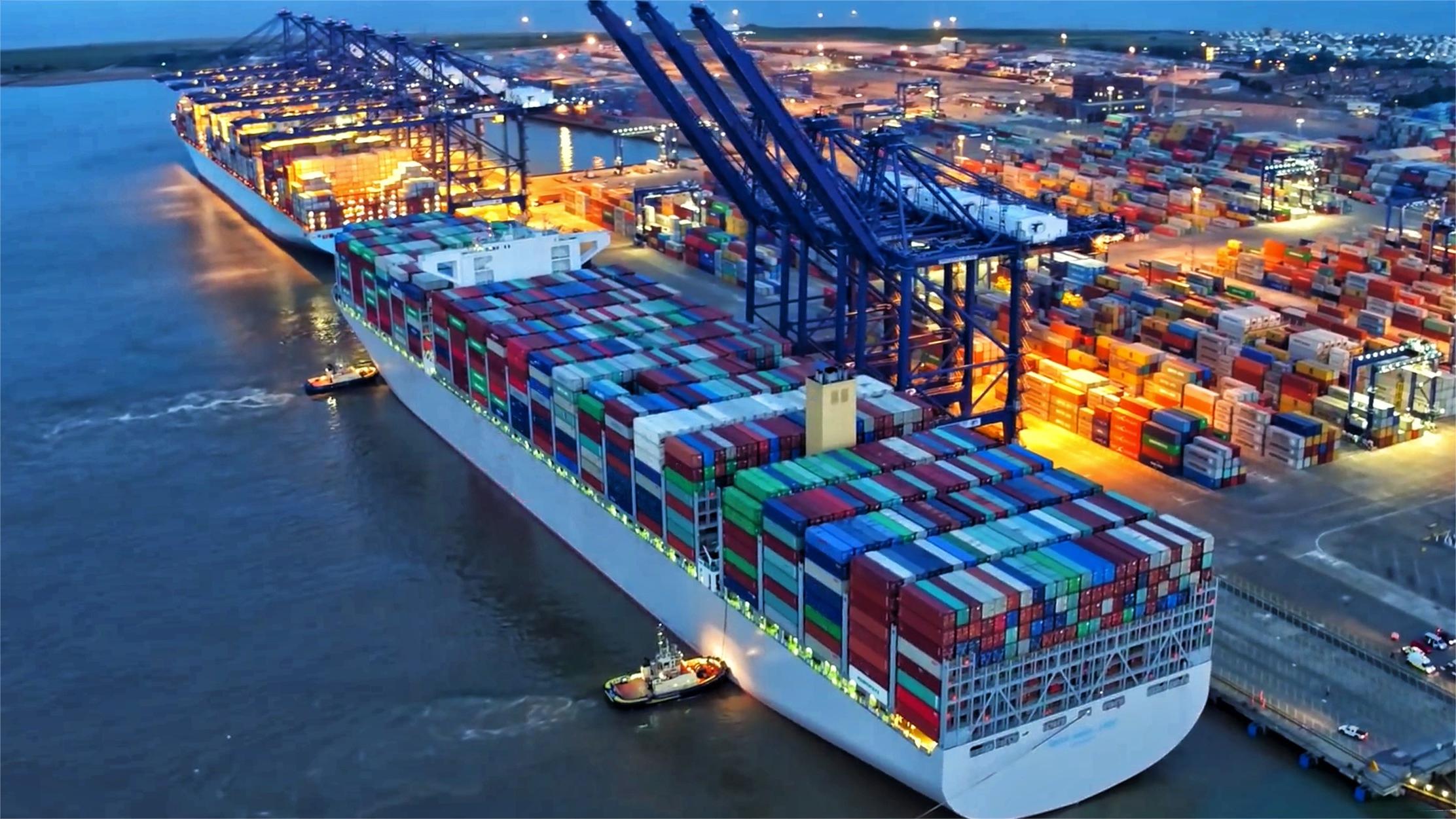
How Do Flat Rack FCL Costs and Transit Times Compare?
Understanding the cost structure and transit times for Flat Rack FCL from China to Poland is vital for budget planning. Several factors influence freight rates, including origin, destination, container size, and current market conditions. Consequently, obtaining a precise quote from a reputable freight forwarder is always recommended.
Ocean freight for a 40-foot Flat Rack container from China to Poland typically ranges from $3,500 to $5,500, as of early 2025. This cost can fluctuate significantly due to fuel surcharges, peak seasons, and carrier capacity. Origin and destination charges, customs duties, and inland transportation add to the total landed cost. Transit times for sea freight usually span 30-40 days, including port-to-port and inland delivery.
Conversely, rail freight offers a quicker alternative, with transit times often between 16-22 days to Poland. However, this speed comes at a higher price point. Rail freight for a similar Flat Rack container might range from $6,000 to $9,000, reflecting its expedited service. This option is often preferred for time-sensitive hardware tools where faster delivery schedules are critical.
Note: Freight rates are subject to change based on fuel costs, carrier capacity, and seasonal demand. Contact us for a current quote tailored to your specific shipment.
What are the Essential Customs and Documentation Requirements?
Navigating customs procedures is a critical aspect of shipping hardware tools from China to Poland. Proper documentation prevents delays, penalties, and ensures compliance with international trade laws. Therefore, engaging with an experienced customs brokerage service is highly advisable.
Key documents typically include the Commercial Invoice, Packing List, Bill of Lading (for sea freight) or Waybill (for rail freight), and a Certificate of Origin. Additionally, depending on the specific hardware tools, you may require product-specific certifications, licenses, or declarations. For instance, certain machinery might need CE marking for import into the EU.
Polish customs authorities will verify cargo descriptions against declared values and classifications. Incorrect Harmonized System (HS) codes can lead to significant issues. Importers must also be prepared for potential inspections and provide any supplementary information requested by customs officials. Adhering to these requirements ensures a smooth clearance process and avoids unexpected costs or delays in your supply chain.
| Document Type | Purpose | Issuing Party |
|---|---|---|
| Commercial Invoice | Details of goods, value, seller/buyer | Exporter |
| Packing List | Itemized list of contents, weights, dimensions | Exporter |
| Bill of Lading / Waybill | Contract of carriage, title to goods | Carrier / Freight Forwarder |
| Certificate of Origin | Confirms country of manufacture | Chamber of Commerce / Exporter |
| Customs Declaration | Formal declaration to customs authorities | Importer / Customs Broker |
How Does Flat Rack FCL Compare to Other Shipping Options?
Choosing the best route for hardware tools from China to Poland involves evaluating Flat Rack FCL against other available shipping methods. Each option offers a distinct balance of cost, speed, and suitability for different cargo types. A comprehensive comparison helps in making an informed logistics decision.
Standard FCL (Full Container Load) is suitable for goods that fit within conventional container dimensions. It’s generally cheaper than Flat Rack FCL because it uses readily available equipment. However, it cannot accommodate oversized or irregularly shaped hardware tools, which Flat Rack FCL excels at handling. LCL (Less than Container Load) is cost-effective for smaller shipments but involves more handling and longer transit times.
Air freight offers the fastest transit, typically 5-7 days from China to Poland. However, it is significantly more expensive and has strict limitations on cargo size and weight. For hardware tools, especially large or heavy items, air freight often becomes economically unfeasible. Therefore, it is usually reserved for urgent, high-value, or critical spare parts.
Rail freight, as discussed, provides a middle ground. It’s faster than sea freight but more expensive, and slower than air freight but more affordable. It can accommodate a wide range of cargo, including some oversized items, making it a strong contender for hardware tools that require quicker delivery than sea but are too large or costly for air transport.
| Shipping Method | Cost Range (40′ equivalent) | Transit Time (China to Poland) | Best For | Limitations |
|---|---|---|---|---|
| Flat Rack FCL (Sea) | $3,500-$5,500 | 30-40 days | Oversized, heavy, non-stackable hardware tools | Long transit time, port congestion risks |
| Flat Rack FCL (Rail) | $6,000-$9,000 | 16-22 days | Oversized, heavy, time-sensitive hardware tools | Higher cost than sea, limited rail network access |
| Standard FCL (Sea) | $2,800-$4,200 | 30-40 days | Standard-sized hardware tools, bulk cargo | Cannot fit oversized items, similar transit time to Flat Rack Sea |
| LCL (Sea) | $50-$80/CBM | 35-45 days | Small volumes of hardware tools (under 15 CBM) | More handling, longer transit, potential for damage |
| Air Freight | $15,000-$25,000 | 5-7 days | Urgent, high-value, small hardware components | Very high cost, strict size/weight limits |

Which Shipping Option Should You Choose for Your Hardware Tools?
Selecting the optimal shipping method for your hardware tools depends on a strategic evaluation of your business priorities. Each option caters to different requirements, influencing your overall logistics strategy. Therefore, a clear understanding of your needs is paramount.
If your primary concern is budget, and transit time is flexible, Flat Rack FCL via sea freight is generally the most economical choice. This method offers significant cost savings for large, heavy, or oversized hardware. Conversely, for projects with strict deadlines, rail freight provides a valuable balance between speed and cost, often justifying the higher expense for faster delivery.
Cargo type also plays a decisive role. For instance, exceptionally heavy or unusually shaped industrial equipment necessitates Flat Rack FCL. If your hardware tools are standard-sized and can fit into a conventional container, standard FCL via sea offers a similar cost advantage. Moreover, for small, urgent components, air freight remains the fastest, albeit most expensive, solution.
Consider hybrid solutions for enhanced flexibility. A combination of rail freight for speed and air freight for critical parts can create a robust supply chain. This approach allows businesses to mitigate risks and adapt to unforeseen circumstances effectively.
Real-World Flat Rack FCL Shipments: Case Studies
Examining actual shipping scenarios provides practical insights into the complexities and solutions for transporting hardware tools. These case studies highlight the successful application of Flat Rack FCL services from China to Poland. They demonstrate how strategic planning can overcome logistical hurdles.
Case Study 1: Large Industrial Press from Shanghai to Wroclaw
This case illustrates a typical Flat Rack FCL shipment for heavy industrial equipment, prioritizing cost-effectiveness over extreme speed. The client needed to transport a robust piece of machinery for a manufacturing facility expansion in Poland. Careful planning ensured compliance with all oversized cargo regulations.
| Category | Detail |
|---|---|
| Route | Shanghai, China -> Wroclaw, Poland |
| Cargo | Industrial Hydraulic Press, 28 CBM, 28,000 kg |
| Container | 40-foot Flat Rack |
| Shipping Details | Carrier: COSCO, Port of Loading: Shanghai, Port of Discharge: Hamburg, Route Type: Transshipment via Singapore |
| Cost Breakdown (estimated, Q3 2024) | Ocean Freight: $4,200, Origin Charges: $450, Destination Charges: $550, Customs & Duties (estimated): $1,200, Total Landed Cost: $6,400 |
| Timeline | Booking to Loading: 7 days, Sea Transit: 35 days, Customs Clearance: 3 days, Total Door-to-Door: 45 days |
| Key Insight | Optimized costs by utilizing a major transshipment hub, balancing transit time with budget constraints for oversized cargo. |
Case Study 2: Specialized Drilling Rig Components from Ningbo to Gdansk
This shipment involved several irregularly shaped components for a specialized drilling rig, requiring precise Flat Rack loading and secure lashing. The client emphasized secure transport and adherence to a moderate delivery schedule. This project showcased expertise in handling complex cargo dimensions.
| Category | Detail |
|---|---|
| Route | Ningbo, China -> Gdansk, Poland |
| Cargo | Drilling Rig Sections, 35 CBM, 22,000 kg |
| Container | 2 x 20-foot Flat Racks |
| Shipping Details | Carrier: Maersk, Port of Loading: Ningbo, Port of Discharge: Gdansk, Route Type: Direct Service |
| Cost Breakdown (estimated, Q4 2024) | Ocean Freight: $7,800 (for two units), Origin Charges: $600, Destination Charges: $700, Customs & Duties (estimated): $1,500, Total Landed Cost: $10,600 |
| Timeline | Booking to Loading: 10 days, Sea Transit: 32 days, Customs Clearance: 4 days, Total Door-to-Door: 46 days |
| Key Insight | Direct service minimized handling and reduced overall transit time, crucial for intricate components. Secure lashing was paramount for safe delivery. |
Case Study 3: Large Industrial Grinder from Shenzhen to Malaszewicze (Sea-Rail Hybrid)
This scenario involved a large industrial grinder that needed faster delivery than pure sea freight but was too heavy for air. A sea-rail hybrid solution proved to be the most effective choice. This strategy balanced cost, speed, and the specific demands of the oversized cargo. The final leg by rail offered significant time savings.
| Category | Detail |
|---|---|
| Route | Shenzhen, China -> Malaszewicze, Poland |
| Cargo | Industrial Grinder, 25 CBM, 18,000 kg |
| Container | 40-foot Flat Rack |
| Shipping Details | Carrier: MSC (Sea), Rail Operator (Land), Port of Loading: Shenzhen, Sea Port of Discharge: Hamburg, Rail Terminal: Malaszewicze, Route Type: Sea to Hamburg, then Rail to Poland |
| Cost Breakdown (estimated, Q1 2025) | Ocean Freight: $4,500, Rail Freight: $3,800, Origin Charges: $500, Destination Charges: $600, Customs & Duties (estimated): $1,100, Total Landed Cost: $10,500 |
| Timeline | Booking to Loading: 8 days, Sea Transit: 28 days, Rail Transit: 7 days, Customs Clearance: 3 days, Total Door-to-Door: 46 days |
| Key Insight | A sea-rail hybrid approach achieved a faster delivery than traditional sea freight, effectively managing the timeline for a critical piece of hardware. This strategy optimized the balance between cost and speed for the Flat Rack FCL shipment. |

Navigating Market Dynamics and Optimizing Your Supply Chain
The global logistics landscape is constantly evolving, with factors like geopolitical events, fuel prices, and port congestion impacting freight rates and transit times. As of Q1 2025, freight rates from China to Europe have shown signs of stabilization after the Red Sea disruptions, but remain susceptible to regional instabilities. Therefore, staying informed about market conditions is crucial.
According to industry benchmarks, rates typically increase by 15-25% during peak seasons, such as August to October, and before major Chinese holidays. Planning your shipments outside these periods can lead to significant cost savings. Furthermore, long-term contracts with freight forwarders can help mitigate price volatility and ensure capacity during busy times.
Implementing a robust supply chain strategy involves more than just selecting a shipping method. It includes optimizing packaging, consolidating shipments, and leveraging technology for real-time tracking. A proactive approach to logistics management ensures resilience and efficiency in delivering your hardware tools from China to Poland. Partnering with an experienced logistics provider like China Top Freight can provide invaluable expertise in these areas.
Conclusion: Securing the Best Flat Rack FCL Route for Your Hardware Tools
Ultimately, selecting the best Flat Rack FCL route for hardware tools from China to Poland requires a thoughtful assessment of cost, transit time, and specific cargo requirements. Both sea and rail freight offer viable solutions, each with distinct advantages. Sea freight provides cost efficiency for larger volumes, while rail freight delivers speed for time-sensitive shipments.
Effective planning, meticulous documentation, and an understanding of market dynamics are essential for a successful supply chain. By considering these factors and leveraging expert logistics partners, businesses can ensure their oversized hardware tools arrive in Poland efficiently and without unexpected complications. This strategic approach to Flat Rack FCL shipping maximizes operational effectiveness and minimizes expenses.
Ready to streamline your logistics?
Ready to optimize your Flat Rack FCL shipping for hardware tools from China to Poland? Contact us today for a personalized quote and expert guidance. Our team is prepared to help you navigate complex logistics and ensure timely, cost-effective delivery of your valuable cargo.
Request Quote