

Heavy equipment and industrial parts play a vital role in global trade, but moving them across borders can be complex. Machinery shipping from China requires careful planning, accurate documentation, and selecting the right shipping method to balance costs, transit times, and compliance. This guide explains the best practices for importers handling machinery freight from China to different markets.
1. What Are the Main Options for Machinery Shipping from China?

Importers generally choose between sea freight, air freight, rail freight, and multimodal solutions depending on cargo size, urgency, and budget.
| Shipping Mode | Transit Time | Best Use Case | Pros | Cons |
|---|---|---|---|---|
| Sea Freight (FCL/LCL) | 25–40 days | Heavy machinery, bulk cargo | Cost-effective, scalable | Long transit, port delays |
| Air Freight | 5–10 days | Urgent or high-value equipment | Fast, secure | Expensive, weight limits |
| Rail Freight (China–EU) | 15–25 days | Europe-bound mid-volume | Balanced speed/cost | Limited coverage |
| Multimodal (Rail + Sea) | 18–30 days | Flexible routing | Optimized cost & speed | Complex logistics |
2. Why Is Sea Freight Popular for Machinery?
Sea freight remains the most widely used method for machinery shipping from China due to its ability to move oversized or heavy loads. It’s the backbone of heavy industry logistics.
3. Can Air Freight Be Used for Machinery Shipping from China?
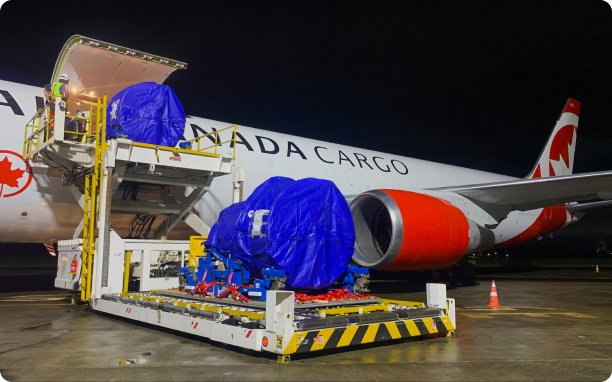
Yes. Air freight is the fastest option, especially for high-value machinery components, spare parts, or urgent deliveries. However, dimensional weight restrictions mean it is cost-effective only for smaller items.
4. How Reliable Is Rail Freight for Machinery Deliveries to Europe?
Rail freight via the China–Europe corridor has grown in popularity. It offers a balance of cost and time, especially for machinery exports to Germany, Poland, and France.
| Destination | Avg. Transit | |
|---|---|---|
| Germany | 18–22 days | Mid-volume machinery |
| Poland | 16–20 days | Balanced cost |
| France | 18–23 days | Fast-growing option |
5. How Much Does Machinery Shipping from China Cost?
Here we place pricing in the middle of the article for better flow.
Container Pricing Reference
| Container Type | Capacity | China → USA | China → UK | China → Australia |
|---|---|---|---|---|
| 20ft FCL | ~28 CBM | $2,200–$2,600 | $2,000–$2,400 | $1,900–$2,200 |
| 40ft FCL | ~58 CBM | $3,700–$4,200 | $3,400–$3,800 | $3,200–$3,700 |
| LCL | 1–15 CBM | $40–$75/CBM | $45–$65/CBM | $50–$80/CBM |
Mode-by-Mode Cost Comparison
| Mode | Avg. Cost | Notes |
|---|---|---|
| Sea Freight | $2,500–$4,200 per container | Best for large or heavy machinery |
| Air Freight | $4–$7/kg | Only for high-value or urgent items |
| Rail Freight | $130–$180/CBM | Good for Europe shipments |
| Multimodal | Mixed pricing | Optimized routes |
What are you waiting for?
Contact chinatopfreight for a fast, free quote.
Are you ready to book?
Access live instant freight quotes
6. What Documents Are Required for Machinery Shipping from China?
Essential Documents Checklist
| Document | Purpose |
|---|---|
| Commercial Invoice | Product description, HS code, value |
| Packing List | Cargo quantity & packaging |
| Bill of Lading / AWB | Proof of carriage |
| Certificate of Origin | For tariff preference |
| Import License (if required) | For regulated machinery |
| CE/UKCA Certification | Mandatory for EU/UK imports |
| Insurance Certificate | Risk protection |
7. How Do Customs Duties and Taxes Affect Machinery Imports?
- Industrial pumps (HS 8413) → 2–3% duty in the US
- Excavators (HS 8429) → 4% duty in the EU + VAT
- Electric motors (HS 8501) → 2.5–3% duty globally
Additionally, VAT/GST applies: UK (20%), Australia (10%), EU varies.
8. What Are the Pros and Cons of Each Shipping Method?
| Method | Pros | Cons |
|---|---|---|
| Sea Freight | Cheapest, handles oversized cargo | Long lead times |
| Air Freight | Fast, secure | Costly |
| Rail Freight | Balanced, eco-friendly | Limited UK coverage |
| Multimodal | Flexible | More planning complexity |
10. What Packaging and Insurance Are Needed for Machinery?
- Reinforced crating and palletizing for safety
- Moisture protection (desiccants, wrapping)
- Marine cargo insurance against damage or theft
11. Should You Use a Freight Forwarder for Machinery Imports?
Yes. Freight forwarders manage oversized cargo, customs, HS codes, insurance, and end-to-end delivery. They also negotiate carrier rates and secure better schedules.
Conclusion
Machinery shipping from China requires balancing costs, transit time, and compliance. Pricing sits at the core of decision-making, but speed, documentation, and packaging also matter. Sea freight remains the cheapest for heavy loads, air freight is best for urgent parts, and rail offers a growing solution for Europe. With proper preparation and a reliable freight forwarder, businesses can save money, minimize risk, and deliver machinery on schedule.
FAQ
Q1: What is the cheapest way to ship heavy machinery from China?
Sea freight (FCL) is the cheapest method for bulky, heavy machinery, though it takes longer compared to air or rail.
Q2: Can machinery parts be shipped by air freight?
Yes. Smaller, high-value parts are suitable for air freight, while oversized cargo should go by sea freight.
Q3: Do I need certifications to import machinery into the UK?
Yes. CE or UKCA certification is mandatory to meet regulatory standards for machinery in the UK and EU.
Q4: How do I calculate duties for machinery imports?
Duties are based on HS codes. Importers should consult tariff databases or brokers for precise rates.
Q5: Can rail freight handle oversized machinery?
Rail freight is suitable for mid-size shipments, but very large machinery may face limitations.