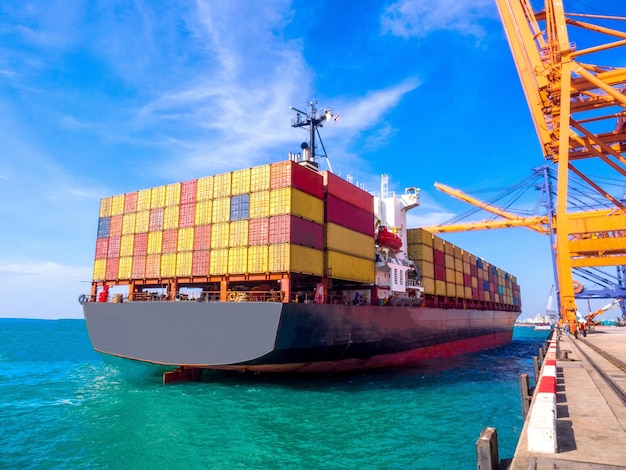
The ocean freight rates from China to USA are a key concern for importers in 2025. While sea shipping is the most cost-effective method for bulk cargo, unpredictable market conditions, customs delays, and port congestion often complicate planning. However, with the right strategy, importers can secure affordable rates, ensure timely transit, and streamline supply chains.
Delivery schedules: Longer lead times demand strategic planning.
Logistics planning: Shippers may adopt multimodal transport to mitigate risks.
8. Can Multimodal Shipping Reduce Costs?
Yes. Combining sea + air or sea + rail routes can balance affordability with speed. For instance, urgent cargo can ship via air while bulk cargo moves by sea.
Mode
Pros
Cons
Sea + Air
Balanced
More complex
Sea + Rail
Eco-friendly
Not direct to USA
Sea Freight Only
Lowest cost
Longest time
9. What Strategies Help Lower Ocean Freight Rates?
Book early to avoid peak surcharges.
Use consolidation services for smaller shipments.
Choose flexible ports to bypass congestion.
Negotiate long-term contracts with forwarders.
Optimize packaging to fit more into containers.
10. Which US Ports Are Best for China Imports?
Los Angeles/Long Beach – Largest volume, cheaper for West Coast.
New York/New Jersey – Best for East Coast markets.
*Rail not available to USA but relevant for China–EU.
12. How to Choose the Best Forwarder for Ocean Freight?
Experience with US customs clearance.
Transparent pricing without hidden charges.
Warehousing and distribution support.
Access to multiple carriers for competitive rates.
Strong customer service and tracking tools.
Final Thoughts
The ocean freight rates from China to USA vary by container size, port selection, and seasonality. While rates remain the most cost-effective option for bulk cargo, importers must plan ahead, optimize packaging, and work with experienced freight forwarders to balance costs with delivery reliability. Therefore, businesses that adapt with smart logistics strategies can stay competitive in global trade.
Q1: What’s the cheapest way to ship small loads from China to USA?
For shipments under 2 CBM, LCL consolidation is usually cheapest, though transit takes longer due to additional handling and container sharing.
Q2: Do I need a customs bond for ocean freight shipments?
Yes, any shipment over $2,500 in value requires a customs bond to guarantee payment of duties and taxes to US Customs.
Q3: Can I track ocean freight shipments in real time?
Yes, most forwarders and carriers provide digital platforms for container tracking, giving visibility on vessel location and estimated arrival times.
Q4: How can importers avoid port congestion delays?
Importers should consider alternate ports, flexible sailing schedules, and book shipments in advance to minimize risks of congestion at major gateways.
Q5: Which Incoterms are most common for ocean freight?
FOB (Free on Board) and CIF (Cost, Insurance & Freight) are most common. DDP (Delivered Duty Paid) is used for hassle-free door-to-door delivery.