

Trusted Customs Clearance from China to Germany: Your Ultimate Guide
Navigating international trade, especially trusted customs clearance from China to Germany, poses many challenges. Importers frequently face complex documentation, tariffs, and regulations, often leading to costly delays. This guide clarifies the process, offering expert insights for seamless, compliant shipments.
Understanding Customs Clearance: Why It Matters for China-Germany Trade
Customs clearance is a mandatory process for all goods crossing international borders. It ensures compliance with destination country laws, including safety standards and tax obligations. This critical step directly impacts your supply chain’s efficiency and cost-effectiveness.
A smooth customs process is vital for maintaining delivery schedules and customer satisfaction. Generally, it involves preparing and submitting required documentation, calculating duties, and verifying cargo meets all regulatory requirements before entering Germany.
Compliance with German and EU customs regulations is non-negotiable. Non-compliance results in severe penalties, fines, or seizure of goods. Accordingly, thorough preparation and accurate declarations are paramount to avoid repercussions.
Key Documents for Trusted Customs Clearance from China to Germany
Accurate and complete documentation forms the backbone of efficient customs clearance. Missing or incorrect paperwork is a primary cause of delays at the German border. Meticulous preparation of all necessary documents is an absolute must to streamline your import process.
The Commercial Invoice details the transaction, describing goods, quantity, value, and Incoterms, directly affecting duty calculations. The Packing List provides package contents, dimensions, and weight, crucial for inspections and handling.
For carriage, a Bill of Lading (sea) or Air Waybill (air) acts as a contract of carriage and title. A Certificate of Origin verifies manufacturing location for tariff purposes, impacting duties. An EORI number and specific import licenses are also often required for EU entry.
| Document | Purpose | Key Information |
|---|---|---|
| Commercial Invoice | Transaction proof, duty calculation | Goods description, value, Incoterms |
| Packing List | Cargo verification, handling | Dimensions, weight, package count |
| Bill of Lading / Air Waybill | Contract of carriage, title | Shipper, consignee, cargo details |
| Certificate of Origin | Preferential tariffs, origin proof | Country of manufacture |
| EORI Number | EU customs identification | Importer’s unique ID |
Navigating German Import Regulations and Tariffs
Germany, as part of the EU, adheres to complex customs regulations and national laws. Understanding these frameworks is critical for achieving customs brokerage compliance and avoiding costly mistakes, ensuring smooth operations.
Specific duties and taxes apply, significantly impacting your products’ final landed cost. German VAT is typically 19% (or 7% reduced), while customs duties vary widely by product HS code and origin, both calculated on the customs value (CIF).
Assigning the correct Harmonized System (HS) code is paramount, as inaccurate classification leads to duty discrepancies or penalties. All economic operators engaged in EU customs activities must possess an EORI number for declarations.
Furthermore, many products are subject to specific German and EU regulations, such as CE marking for electronics or REACH for chemicals. Due diligence is vital for these specific rules to ensure compliance.
Choosing the Right Shipping Method for Your Cargo
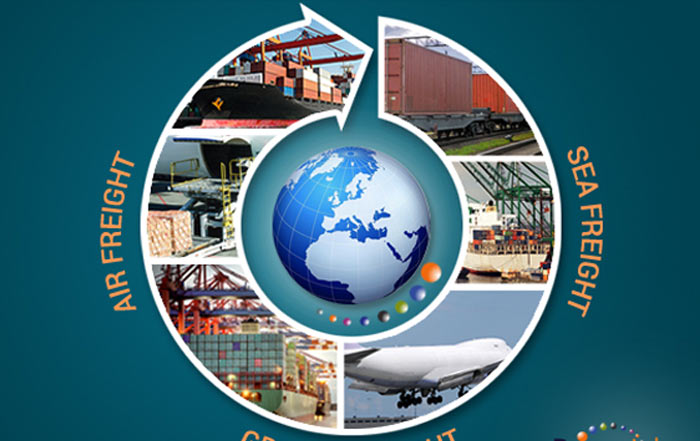
Selecting the optimal shipping method from China to Germany depends on urgency, cost, cargo volume, and product type. Each mode offers distinct advantages and disadvantages, thus requiring a careful assessment to align with your supply chain strategy.
For large volumes and non-urgent shipments, sea freight is the most cost-effective solution, with transit times of 28-35 days. When speed is paramount, air freight offers the fastest transit (3-7 days) but at a considerably higher price.
Rail freight presents a balanced option, faster than sea (15-20 days) and more economical than air. This option gains popularity for reliability and environmental benefits, connecting major hubs to Germany effectively.
How Does Shipping from China to Germany Compare Across Methods?
Objectively comparing viable shipping alternatives for your China-Germany route is essential for making the best logistics decision. Factors like cargo type, environmental impact, and handling requirements should also influence your choice.
| Shipping Method | Cost Range (per 40HQ/100kg) | Transit Time | Best For | Limitations |
|---|---|---|---|---|
| Sea Freight (FCL) | $3,000-4,200 | 28-35 days | Large volumes, heavy goods, cost-saving | Slow, port congestion risk |
| Sea Freight (LCL) | $80-120/CBM | 30-40 days | Smaller shipments (under 15 CBM), cost-saving | Slower than FCL, more handling |
| Air Freight | $6-10/kg | 3-7 days | Urgent, high-value, perishable goods | High cost, volume/weight restrictions |
| Rail Freight | $8,000-12,000 (per 40HQ) | 15-20 days | Medium urgency, balanced cost/speed, heavy goods | Fixed routes, less flexible, potential border delays |

Streamlining Your Supply Chain: The Role of a Freight Forwarder
Managing international logistics and customs brokerage can be overwhelming, making a professional freight forwarder indispensable. Partnering with one simplifies the entire process, saving time, reducing stress, and minimizing risks.
They act as your logistics partner, handling everything from cargo pickup in China to final delivery in Germany, achieving truly door-to-door solutions. Expert customs brokers ensure accurate declarations, calculate duties, and proactively address issues.
Many forwarders offer comprehensive door-to-door services, managing every step from collection to final delivery, simplifying logistics. Modern forwarders also leverage advanced logistics software for real-time tracking, digital documentation, and automated communication, providing transparency and accurate delivery anticipation.
Real-World Scenarios: Successful Shipments from China to Germany
Real-world case studies offer deeper insights into shipping and trusted customs clearance from China to Germany. These illustrate practical considerations and outcomes, providing a realistic perspective for your own shipments based on current market rates and industry benchmarks.
Case Study 1: Large Volume Sea Freight
| Route | Shenzhen, China -> Hamburg, Germany |
| Cargo | Furniture components, 55 CBM, 8,500 kg |
| Container | 1 x 40HQ |
| Shipping Details | |
| Carrier/Service | Major carrier (e.g., COSCO) |
| Port of Loading | Yantian, Shenzhen |
| Port of Discharge | Hamburg, Germany |
| Route Type | Direct |
| Cost Breakdown | |
| Ocean Freight | $3,800 (Typical rates as of early 2025) |
| Origin Charges (THC, documentation) | $350 |
| Destination Charges | $450 |
| Customs & Duties (estimated) | $1,200 |
| Total Landed Cost | $5,800 |
| Timeline | |
| Booking to Loading | 5 days |
| Sea Transit | 32 days |
| Customs Clearance | 3 days |
| Total Door-to-Door | 40 days |
| Key Insight | Cost-effective for bulk, requires long lead time. Q4 peak season rates can add 20-30%. |
Case Study 2: Time-Sensitive Air Freight
| Route | Shanghai, China -> Frankfurt, Germany |
| Cargo | High-value electronics, 1.2 CBM, 250 kg |
| Container | Air Cargo (LCL) |
| Shipping Details | |
| Carrier/Service | Major airline cargo (e.g., Lufthansa Cargo) |
| Port of Loading | PVG, Shanghai |
| Port of Discharge | FRA, Frankfurt |
| Route Type | Direct |
| Cost Breakdown | |
| Air Freight | $1,875 (Based on Q3 2024 market rates, $7.5/kg) |
| Origin Charges (documentation, handling) | $150 |
| Destination Charges | $200 |
| Customs & Duties (estimated) | $400 |
| Total Landed Cost | $2,625 |
| Timeline | |
| Booking to Loading | 2 days |
| Air Transit | 2 days |
| Customs Clearance | 1 day |
| Total Door-to-Door | 7 days |
| Key Insight | Fastest option for urgent, high-value goods. Higher cost but minimal inventory holding time. |
Case Study 3: E-commerce Amazon FBA Shipment
| Route | Ningbo, China -> Amazon FBA Warehouse, Germany |
| Cargo | Small consumer goods, 8 CBM, 1,200 kg |
| Container | LCL Sea Freight |
| Shipping Details | |
| Carrier/Service | Freight forwarder with FBA expertise |
| Port of Loading | Ningbo |
| Port of Discharge | Hamburg, Germany |
| Route Type | Transshipment via Singapore |
| Cost Breakdown | |
| Ocean Freight | $960 (Industry average for LCL, $120/CBM) |
| Origin Charges (documentation, handling) | $280 |
| Destination Charges | $380 |
| Customs & Duties (estimated) | $600 |
| Last-mile delivery to FBA | $250 |
| Total Landed Cost | $2,470 |
| Timeline | |
| Booking to Loading | 7 days |
| Sea Transit | 38 days |
| Customs Clearance | 4 days |
| Total Door-to-Door | 55 days |
| Key Insight | Integrated FBA service streamlines complex logistics. Transshipment adds a few days but can offer better rates. |
Common Challenges and How to Avoid Them
Despite meticulous planning, challenges can arise during customs clearance from China to Germany. Proactive identification and mitigation strategies are essential for a smooth supply chain. Market data suggests customs delays and unexpected costs are frequent issues.
Delays often stem from incomplete documentation, incorrect tariff classifications, or physical inspections. Errors on commercial invoices or certificates can trigger extensive scrutiny. To avoid this, ensure all paperwork is precise, submitted in advance, and double-checked with experienced partners.
Demurrage, detention, storage fees, and unforeseen duties inflate shipping costs. Accurate tariff classification and clear Incoterms help predict and manage these expenses. As of Q1 2025, freight rates remain dynamic; fuel surcharges and seasonal peaks (August-October) consistently drive prices up. Budget for increases and book in advance; transparent pricing from your forwarder is vital.
Achieving Seamless and Trusted Customs Clearance from China to Germany
In conclusion, successful and trusted customs clearance from China to Germany relies on meticulous preparation, accurate documentation, and deep regulatory understanding. Navigating tariffs, VAT, and compliance demands expertise. Proactive planning minimizes risks and optimizes your supply chain.
Partnering with a knowledgeable freight forwarder like China Top Freight is indispensable. Their insights into market trends and logistical management ensure your goods reach Germany efficiently and compliantly. We invite you to explore our tailored solutions.
Ready to streamline your logistics?
Ready to simplify your imports and ensure trusted customs clearance from China to Germany? Don’t let complex regulations hinder your supply chain. Contact us today for a personalized quote, and let our experts handle your logistics with precision and efficiency.
Request Quote